
James Webb Unveils 'Forbidden' Exoplanet Challenging Formation Theories
James Webb Unveils 'Forbidden' Exoplanet Challenging Formation Theories
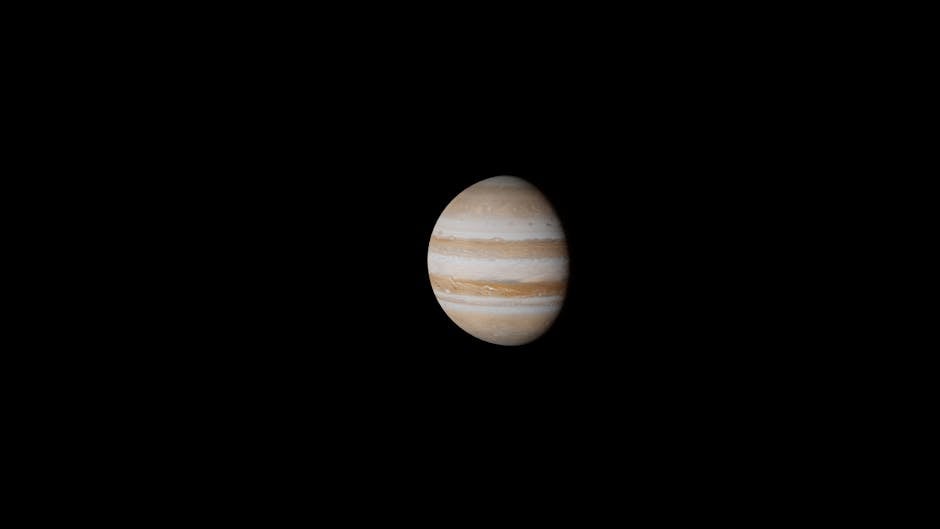
NASA's James Webb Space Telescope (JWST) has recently identified an exoplanet, WASP-193b, whose characteristics defy current astrophysical understanding. Orbiting a distant star located approximately 1,200 light-years from Earth in the constellation Draco, this celestial body presents an unprecedented combination of size and extremely low density, prompting scientists to label it a "forbidden" planet that challenges established planetary formation models.
The discovery, confirmed through detailed observations by the JWST, highlights a world so unusual in its properties that it is considered a significant outlier, pushing the boundaries of what was previously thought possible for planetary structures and raising new questions about the universe's diversity.
Background: The Quest for Other Worlds
The search for planets beyond our solar system, known as exoplanets, began in earnest in the mid-1990s. Early detections were often massive gas giants orbiting very close to their stars, dubbed "hot Jupiters." These initial discoveries already hinted at a planetary diversity far greater than anticipated based on our solar system's architecture.
Early Discoveries and Limitations
Before the advent of advanced space telescopes, ground-based observatories primarily utilized the radial velocity method, detecting the subtle wobble of a star caused by an orbiting planet’s gravitational pull. Later, the transit method, observing the slight dimming of a star’s light as a planet passes in front of it, became increasingly prevalent. Missions like NASA’s Kepler Space Telescope, launched in 2009, revolutionized exoplanet research by discovering thousands of planets using the transit method, revealing a vast array of planetary sizes, masses, and orbital configurations.
However, even with these advancements, characterizing the atmospheres and precise densities of many exoplanets remained challenging. The sheer distance and the faintness of the signals required instruments with unparalleled sensitivity and observational precision.
The Dawn of Webb’s Capabilities
The James Webb Space Telescope, launched in December 2021, represents a monumental leap in astronomical observation. Designed to operate primarily in the infrared spectrum, JWST can peer through cosmic dust and gas clouds, observe distant galaxies, and, crucially for exoplanet research, analyze the atmospheres of planets with unprecedented detail. Its instruments allow for high-resolution spectroscopy, capable of identifying the chemical signatures of various elements and molecules in exoplanetary atmospheres during transits.
JWST’s ability to measure the precise dimming of starlight at different infrared wavelengths provides critical data for determining an exoplanet’s size, mass (when combined with other methods), and atmospheric composition, offering insights into its formation and evolution.
The WASP Project and Initial Detections
WASP-193b was initially detected by the Wide Angle Search for Planets (WASP) project, a collaborative effort using ground-based observatories to identify exoplanets via the transit method. The WASP project, comprising telescopes in both the Northern and Southern hemispheres, systematically surveys large areas of the sky, looking for periodic dips in stellar brightness. This initial detection provided the first clues to WASP-193b’s existence and its orbital period around its host star, WASP-193.
While WASP provided the foundational data, the unique nature of WASP-193b’s transit signal, indicating an unusually large planet, prompted the need for more sophisticated follow-up observations. The extreme properties suggested by initial data made it a prime target for the cutting-edge capabilities of the James Webb Space Telescope.
Key Developments: Unveiling WASP-193b’s Enigma
The detailed observations conducted by the James Webb Space Telescope provided the definitive measurements that revealed the truly extraordinary nature of WASP-193b. These measurements confirmed its status as an exoplanet that significantly deviates from established models of planetary formation and evolution.
JWST’s Observational Prowess
Scientists utilized JWST’s highly sensitive instruments, including the Near-Infrared Imager and Slitless Spectrograph (NIRISS) and the Mid-Infrared Instrument (MIRI), to precisely capture the changes in starlight as WASP-193b transited its host star. By observing multiple transits, researchers were able to gather enough data to construct highly accurate light curves and spectroscopic profiles. These observations were critical for determining the planet’s exact size and for inferring its atmospheric properties and incredibly low mass.
Unprecedented Size and Mass Measurements
The JWST data revealed that WASP-193b is an enormous planet, approximately 1.5 times the radius of Jupiter, the largest planet in our solar system. However, its mass presents a stark contrast to its colossal size. Follow-up radial velocity measurements from ground-based telescopes, combined with the JWST transit data, determined that WASP-193b has a mass roughly 0.14 times that of Jupiter. This combination of being significantly larger than Jupiter yet substantially less massive immediately flagged it as an anomaly.
The “Cotton Candy” Density Paradox
The most striking revelation about WASP-193b is its extraordinarily low density. With a radius 1.5 times Jupiter’s and a mass only 0.14 times Jupiter’s, its calculated density is approximately 0.059 grams per cubic centimeter. To put this into perspective, this density is comparable to that of cotton candy or marshmallows, making it one of the lightest and fluffiest planets ever discovered. In contrast, Jupiter has a density of about 1.33 grams per cubic centimeter, and Earth’s is 5.51 grams per cubic centimeter.
This extreme fluffiness implies that WASP-193b is almost entirely composed of gas, with a vast, extended atmosphere and likely no significant solid core. The atmosphere must be incredibly diffuse and expansive, giving the planet its immense size despite its meager mass.
Challenging Planetary Formation Models
The existence of WASP-193b presents a profound challenge to the two primary models of giant planet formation: core accretion and disk instability. The core accretion model posits that planets form from a solid core accumulating gas from the protoplanetary disk. The disk instability model suggests that planets can form rapidly from the gravitational collapse of dense regions within the disk itself.
Neither model, in their current forms, can adequately explain how a planet as large and as low-density as WASP-193b could have formed and maintained such properties. The immense amount of gas required to create such an extended atmosphere without collapsing into a denser state, especially around a star similar to our Sun, is difficult to reconcile with the timescales and conditions typically associated with planetary formation. The “forbidden” label stems from this fundamental incompatibility with established theories, making WASP-193b “100 times richer” in its capacity to perplex and inspire new scientific inquiry.
The planet’s host star, WASP-193, is an F-type star, slightly larger and hotter than our Sun. WASP-193b orbits this star very closely, completing an orbit in just 6.25 Earth days. This close proximity means it is intensely irradiated, which would typically cause its atmosphere to be stripped away or to contract over time, making its observed extended, super-fluffy state even more puzzling.
Impact: Reshaping Astrophysical Understanding
The discovery of WASP-193b has sent ripples through the astrophysical community, necessitating a re-evaluation of fundamental assumptions about how planets form and evolve. Its extreme properties serve as a critical data point that pushes the boundaries of theoretical models.
Revisiting Core Accretion and Disk Instability
The primary impact is on the theoretical frameworks of planetary formation. Scientists are now faced with the task of refining or developing entirely new models that can account for objects like WASP-193b. This might involve exploring scenarios where planets accumulate gas at an exceptionally rapid rate, or where atmospheric escape mechanisms are far less efficient than previously thought, allowing for the retention of such an extended envelope. Alternatively, it could point to entirely novel formation pathways or evolutionary processes that operate under specific, yet to be understood, conditions.
The challenge posed by WASP-193b is particularly significant because it represents an extreme outlier. Understanding how it came to be could unlock a deeper, more comprehensive understanding of the entire spectrum of planetary diversity, from rocky worlds to gas giants, and even to these “cotton candy” planets.
Implications for Exoplanet Diversity
WASP-193b underscores the incredible diversity of exoplanets that exist in the galaxy. It expands the known categories of planetary types, adding a new extreme to the spectrum of super-Earths, mini-Neptunes, and hot Jupiters. This expanded view of planetary possibilities has profound implications for the search for life beyond Earth, as it suggests that the universe is far more imaginative in its planetary creations than human science has yet conceived.
While WASP-193b itself is highly unlikely to host life due to its gaseous nature and extreme temperatures, its existence prompts scientists to consider how such unique conditions might arise and what other unexpected planetary environments could be out there.
Inspiring Public Engagement and Future Scientists
Discoveries like WASP-193b also have a significant impact on public engagement with science. The evocative description of a “cotton candy” planet that “shouldn’t exist” captures the imagination and highlights the awe-inspiring capabilities of instruments like the James Webb Space Telescope. Such findings inspire a new generation of scientists and engineers, encouraging them to pursue careers in STEM fields and contribute to humanity’s ongoing quest to understand the cosmos.
What Next: Charting the Future of Exoplanet Research
The discovery of WASP-193b is not an endpoint but rather a new beginning for a focused area of exoplanet research. The scientific community is now poised to delve deeper into understanding this enigmatic world and searching for others like it.
Further JWST Observations and Atmospheric Analysis
The immediate next steps involve more extensive observations of WASP-193b using the James Webb Space Telescope. Future observations will aim to conduct more detailed atmospheric characterization, looking for specific chemical signatures that could provide clues about its formation history and the processes maintaining its extended atmosphere. Scientists will seek to identify the precise composition of its upper atmosphere, including the presence of water, methane, carbon dioxide, or other molecules, which could shed light on its thermal structure and evolutionary path.
These follow-up studies will be crucial for building a more complete picture of this “forbidden” planet and for testing new theoretical models.
New Theoretical Frameworks
The challenge posed by WASP-193b will undoubtedly spur the development of new theoretical models for planetary formation and evolution. Researchers will explore unconventional scenarios, perhaps involving unique protoplanetary disk conditions, unusually high atmospheric opacities, or novel mechanisms for gas accumulation and retention. These new models will need to explain how a planet can grow to such an enormous size while retaining such a low mass and density, especially in a close orbit around its star.
This iterative process of observation informing theory, and theory guiding further observation, is fundamental to scientific progress.
The Search for Analogs and Extremes
The discovery of WASP-193b will also prompt astronomers to actively search for similar “super-fluffy” planets. Identifying more such objects would help determine if WASP-193b is a unique outlier or part of a new, albeit rare, class of exoplanets. The existence of multiple such planets would strengthen the case for a specific, yet-to-be-understood, formation mechanism.
Furthermore, this quest will extend to exploring other extremes in planetary properties, pushing the boundaries of what is known and continuously refining our understanding of the universe’s vast and varied planetary population.
Next-Generation Telescopes and Missions
While JWST provides unprecedented capabilities, the challenges posed by planets like WASP-193b will also inform the design and scientific goals of future space telescopes and missions. The need for even higher resolution, broader spectral coverage, and enhanced sensitivity will drive the next generation of instruments, ensuring that humanity continues to unravel the mysteries of exoplanets and the cosmos for decades to come.
