
President Donald Trump recently stated that a prolonged conflict with Iran would conclude "soon," though he clarified that this resolution would not materialize within the current week. The remarks, made from Washington D.C., offered a glimpse into the administration's outlook on the escalating tensions that have characterized U.S.-Iran relations for years. His comments suggest an anticipation of a significant shift in the geopolitical landscape, albeit not an immediate one.
Background: A Decades-Long Standoff
The relationship between the United States and Iran has been fraught with tension for over four decades, rooted in historical grievances and divergent strategic interests. The 1979 Iranian Revolution, which saw the overthrow of the U.S.-backed Shah Mohammad Reza Pahlavi and the establishment of an Islamic Republic, fundamentally reshaped the geopolitical landscape of the Middle East. The subsequent hostage crisis at the U.S. embassy in Tehran solidified an adversarial stance that has largely persisted.
The Nuclear Question and the JCPOA
Central to much of the modern conflict has been Iran's nuclear program. Concerns that Iran was pursuing nuclear weapons capabilities led to a series of international sanctions and intense diplomatic efforts. These culminated in the 2015 Joint Comprehensive Plan of Action (JCPOA), commonly known as the Iran nuclear deal. Signed by Iran, the P5+1 (China, France, Russia, United Kingdom, United States, plus Germany), and the European Union, the agreement aimed to restrict Iran's nuclear activities in exchange for sanctions relief. It imposed stringent limitations on uranium enrichment, allowed for extensive international inspections by the International Atomic Energy Agency (IAEA), and established mechanisms to prevent Iran from developing nuclear weapons.
Trump’s Withdrawal and “Maximum Pressure”
In May 2018, President Trump announced the United States' withdrawal from the JCPOA, labeling it a "terrible deal" that failed to address Iran's ballistic missile program, its support for regional proxy groups, or the deal's sunset clauses. Following the withdrawal, the Trump administration initiated a "maximum pressure" campaign, reimposing and escalating sanctions on Iran's oil exports, financial sector, and other key industries. The stated goal was to compel Iran to negotiate a new, broader agreement that would encompass not only its nuclear program but also its regional behavior and missile development.
Escalation of Tensions (2019-2020)
The "maximum pressure" campaign led to a significant escalation of tensions in the Persian Gulf region. In 2019, there were a series of incidents, including attacks on oil tankers in the Strait of Hormuz, the downing of a U.S. surveillance drone by Iran, and drone and missile attacks on Saudi Arabian oil facilities, which the U.S. and its allies attributed to Iran or its proxies.
The situation reached a critical point in January 2020, when a U.S. drone strike in Baghdad, Iraq, killed Qassem Soleimani, the commander of the Islamic Revolutionary Guard Corps' Quds Force, a powerful figure in Iran's military and intelligence apparatus. Iran retaliated with ballistic missile strikes on Iraqi bases housing U.S. troops, causing traumatic brain injuries to dozens of American service members. These events brought the two nations to the brink of a full-scale military conflict, underscoring the volatility of the relationship.
Regional Dynamics and Proxy Conflicts
Beyond the direct U.S.-Iran confrontation, the broader Middle East has been a theatre for proxy conflicts, with Iran supporting various non-state actors and militias across the region. These include Hezbollah in Lebanon, Houthi rebels in Yemen, and various Shiite militias in Iraq and Syria. The U.S. and its regional allies, particularly Saudi Arabia and Israel, view Iran's regional influence as destabilizing and a direct threat to their security interests. Israel, in particular, has expressed grave concerns about Iran's nuclear ambitions and its military presence near its borders.
Key Developments: Shifting Sands
President Trump's recent assertion that the Iran conflict will end "soon" but "not this week" comes amidst a complex web of ongoing developments, hinting at potential shifts in a long-standing stalemate. The statement itself, while characteristic of the President's style, has prompted speculation regarding its underlying implications.
The Stalemate and Indirect Engagements
Currently, direct high-level talks between the United States and Iran remain largely non-existent. The U.S. maintains its stance that it is open to negotiations without preconditions, but only if Iran demonstrates a willingness to address broader security concerns. Iran, conversely, insists on the lifting of all U.S. sanctions as a prerequisite for any meaningful dialogue, viewing the "maximum pressure" campaign as economic warfare.
Despite the lack of direct engagement, various intermediaries have attempted to bridge the divide. Countries like Oman, Switzerland (which represents U.S. interests in Iran), Iraq, and France have, at different times, played roles in facilitating indirect communication or de-escalation efforts. These diplomatic channels, though often discreet, are crucial in preventing miscalculation and exploring potential off-ramps from conflict.
Economic Pressures and Internal Unrest
The U.S. sanctions have had a profound impact on Iran's economy, severely curtailing its oil exports, which are a primary source of government revenue. This economic hardship has led to significant inflation, currency depreciation, and widespread public discontent within Iran. Protests, often sparked by economic grievances, have erupted periodically across the country, sometimes met with forceful government responses. The Iranian leadership faces a delicate balance between managing internal dissent and projecting strength against external pressures. The effectiveness of the "maximum pressure" campaign in altering Iran's behavior remains a subject of intense debate among analysts and policymakers.
Military Posturing and Regional Security
Both the U.S. and Iran have maintained a significant military presence in the region. The U.S. has periodically deployed additional troops, naval assets, and air defense systems to the Persian Gulf, citing threats to its interests and allies. Iran, in turn, has continued its missile development program, conducted military exercises, and threatened to disrupt shipping in the Strait of Hormuz if its oil exports are blocked. The constant military posturing creates a precarious security environment, where even minor incidents could rapidly escalate.
Rhetorical Shifts and Strategic Ambiguity
President Trump's statement could be interpreted in several ways. It might signal an internal assessment within the administration that the "maximum pressure" campaign is nearing a tipping point, potentially forcing Iran to the negotiating table. Alternatively, it could be a rhetorical maneuver designed to project confidence, manage expectations, or even test Iran's response. The qualifier "not this week" is particularly noteworthy, as it suggests that while a resolution is anticipated, it is not imminent, perhaps indicating ongoing, albeit unpublicized, diplomatic efforts or a recognition of the complex nature of any potential breakthrough.
Regional actors are also adapting. Saudi Arabia and the UAE, while maintaining a strong alliance with the U.S., have also shown signs of cautious engagement with Iran, perhaps seeking to reduce regional tensions independently. This evolving regional dynamic adds another layer of complexity to the U.S.-Iran standoff.
Impact: Ripple Effects Across the Globe
The ongoing U.S.-Iran tensions and the prospect of their resolution or further escalation carry significant implications, affecting not only the direct parties but also regional stability, global economies, and international non-proliferation efforts.
Impact on Iran
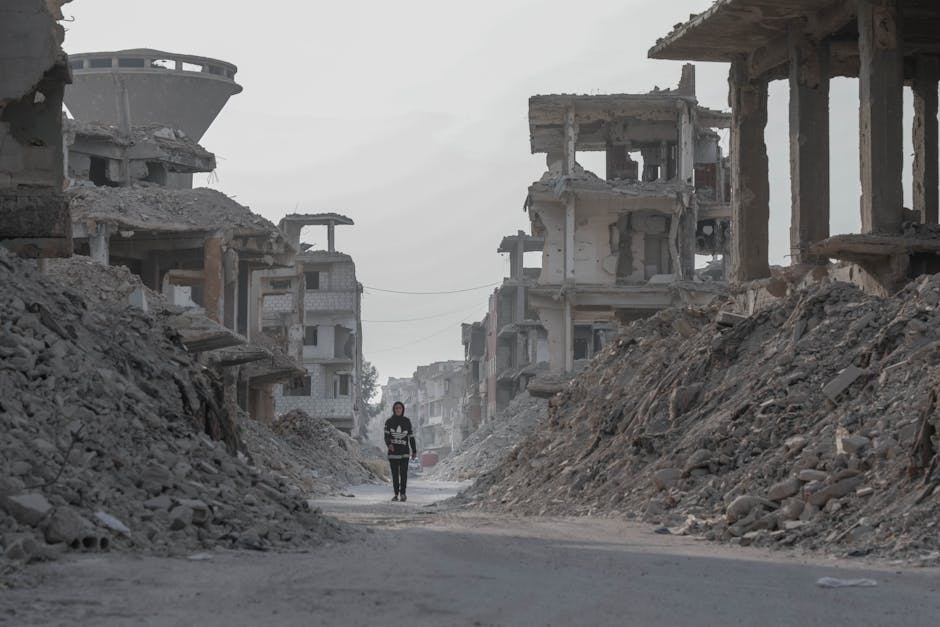
The "maximum pressure" campaign has inflicted severe economic hardship on Iran. The drastic reduction in oil revenues has led to a deep recession, currency devaluation, and high inflation. This has directly impacted the daily lives of ordinary Iranians, leading to shortages of essential goods, including medicines, and widespread unemployment. Politically, the sanctions have fueled internal debates between hardliners, who advocate for resistance, and reformers, who seek diplomatic solutions. The regime faces the challenge of maintaining social cohesion amidst economic distress and external pressure.
Impact on the United States
For the United States, the conflict with Iran has significant foreign policy and domestic implications. It ties up considerable military resources in the Middle East, potentially diverting attention and assets from other strategic priorities. The safety of U.S. troops and personnel in the region remains a constant concern. Internationally, the U.S. withdrawal from the JCPOA strained relations with European allies, who sought to preserve the deal. Domestically, the Iran policy is a contentious issue, influencing political discourse and public opinion, particularly in an election year.
Impact on Regional Allies
U.S. regional allies, particularly Saudi Arabia, the United Arab Emirates, and Israel, are profoundly affected. They view Iran's nuclear program and its network of proxy militias as existential threats. The instability in the Persian Gulf directly impacts their security and economic interests, particularly oil exports. While these nations largely support U.S. efforts to counter Iran, they also bear the brunt of potential retaliation or regional destabilization. Israel, in particular, maintains a robust intelligence and military posture against perceived Iranian threats, conducting operations to prevent arms transfers to Hezbollah and to disrupt Iranian military entrenchment in Syria.
Impact on European Signatories
The European signatories to the JCPOA (France, Germany, and the United Kingdom) have consistently sought to preserve the nuclear deal, viewing it as a crucial pillar of the non-proliferation regime. The U.S. withdrawal complicated their efforts to maintain economic ties with Iran and adhere to their commitments under the agreement. They have attempted to create financial mechanisms to circumvent U.S. sanctions, albeit with limited success. The ongoing tensions force European nations to balance their transatlantic alliance with the U.S. against their strategic interest in preventing nuclear proliferation and maintaining regional stability.
Global Economic Impact
The Strait of Hormuz, a narrow waterway connecting the Persian Gulf to the open ocean, is a critical chokepoint for global oil shipments. Any significant disruption in the region due to conflict or heightened tensions can lead to spikes in global oil prices, impacting economies worldwide. Shipping insurance costs for vessels transiting the Gulf have also increased, adding to the economic burden. The uncertainty surrounding Iran's oil supply and the stability of the region contributes to volatility in international energy markets.
Humanitarian and Non-Proliferation Implications
Beyond economic and security concerns, the sanctions have had humanitarian consequences, particularly affecting Iran's ability to import essential medicines and medical equipment, despite humanitarian exemptions. This raises ethical concerns about the impact of broad economic sanctions on civilian populations. Furthermore, the erosion of the JCPOA and the growing distrust between major powers pose a significant challenge to the international non-proliferation regime, potentially setting a dangerous precedent for future nuclear agreements.
What Next: Pathways to Resolution or Escalation
President Trump's statement, while not offering specific details, opens a window into potential future scenarios for the U.S.-Iran relationship. The path forward remains highly uncertain, characterized by a delicate balance between diplomatic overtures, continued pressure, and the ever-present risk of escalation.
Conditions for Negotiations
A major hurdle to any resolution remains the differing preconditions for talks. Iran insists on the complete lifting of U.S. sanctions before any negotiation, viewing them as illegal and a violation of international law. The U.S., conversely, demands a comprehensive agreement that addresses not only Iran's nuclear program but also its ballistic missile capabilities and its regional behavior. Bridging this fundamental gap requires significant diplomatic ingenuity and a willingness from both sides to compromise. Third-party mediators, such as Switzerland, Oman, or even the United Nations, could play a crucial role in facilitating indirect dialogue to establish a framework for future direct talks.
The U.S. Election Factor
The upcoming U.S. presidential election in November will undoubtedly influence the trajectory of U.S.-Iran policy. A second Trump term could see a continuation, or even intensification, of the "maximum pressure" campaign, with the hope that continued economic strain will eventually force Iran to capitulate. A new administration, particularly under a Democratic president, might signal a return to diplomacy, potentially seeking to re-enter a modified JCPOA or pursue a new, less confrontational approach. Iran's leadership will be closely watching the election results, which could shape their own strategic calculations.
Iran’s Internal Dynamics
Iran itself is heading towards its own presidential election, which could see a shift in leadership. The outcome will determine whether hardliners or more pragmatic elements gain ascendancy, influencing Iran's willingness to engage with the West. The internal political landscape, coupled with ongoing economic challenges and public discontent, will significantly impact the flexibility of Iran's negotiating position. Any perceived weakness or concession could be politically damaging for the ruling establishment.
Potential Scenarios for De-escalation or Escalation
Several scenarios could unfold: * Continued Standoff: The most likely immediate scenario is a continuation of the current stalemate, with both sides maintaining their positions, sanctions remaining in place, and occasional low-level provocations.
* Diplomatic Breakthrough: A less likely but possible scenario involves a diplomatic breakthrough, perhaps initiated by back-channel negotiations, leading to a de-escalation of tensions and the establishment of a framework for broader talks. This could involve a phased approach, where some sanctions relief is offered in exchange for initial Iranian concessions.
* Limited Conflict: The risk of limited military conflict remains, triggered by an incident or miscalculation in the Gulf. Both sides have demonstrated a willingness to respond to perceived aggressions, raising the specter of a wider confrontation.
* Return to JCPOA (Modified): A future U.S. administration might seek to return to a modified version of the JCPOA, addressing some of the concerns raised by the Trump administration while still leveraging the original agreement's non-proliferation mechanisms. This would likely require extensive renegotiation with all original signatories.
* New Comprehensive Deal: The ultimate goal of the "maximum pressure" campaign is a new, more comprehensive deal. This would entail Iran agreeing to stricter limits on its nuclear program, curtailing its ballistic missile development, and reducing its regional destabilizing activities, in exchange for significant sanctions relief. The feasibility of such a deal, given the deep distrust, is highly questionable in the short term.
The Meaning of “End Soon”
President Trump's phrase "end soon" is open to interpretation. It could refer to:
* Cessation of Hostilities: A halt to direct military confrontations and proxy conflicts.
* New Agreement: The conclusion of a new diplomatic deal that addresses the core issues.
* Shift in Iranian Behavior: A change in Iran's regional posture or nuclear ambitions due to sustained pressure.
* A Broader Regional Settlement: A more comprehensive peace or security framework for the Middle East that includes Iran.
The qualifier "not this week" suggests that while the administration might perceive momentum or anticipate a future turning point, the immediate challenges of bringing Iran to the negotiating table or achieving a significant policy shift are substantial. It manages expectations while maintaining a posture of confidence. The international community, including the UN and the IAEA, will continue to monitor Iran's nuclear activities and advocate for peaceful resolutions, highlighting the global stakes involved in this protracted geopolitical drama.
