
A new era of connectivity is reshaping the National Capital Region (NCR), driven by ambitious infrastructure projects that are bringing distant locales within a 90-minute commute of central Delhi. This paradigm shift, encapsulated by the phrase 'Delhi Ab Door Nahi' (Delhi is no longer far), is fundamentally altering urban planning, real estate dynamics, and socio-economic patterns across the region. The expanding radius promises a more distributed and sustainable growth model for one of the world's largest metropolitan areas.
Background: The Evolution of NCR and Its Challenges
The National Capital Region, established in 1985, was conceived to decongest Delhi and promote balanced development across its satellite towns in Haryana, Uttar Pradesh, and Rajasthan. Initially, the NCR encompassed areas like Gurugram, Noida, Ghaziabad, and Faridabad, which developed rapidly as extensions of Delhi's economic might. However, as Delhi's population surged past 20 million and the immediate NCR cities became saturated, issues of traffic congestion, pollution, and unaffordable housing intensified. Commutes from even these proximate areas often stretched to two hours or more, negating the very purpose of decentralization.
For decades, connectivity primarily relied on conventional highways and a burgeoning metro network that, while transformative for intra-city travel, struggled to bridge the gap to more distant zones. The limitations of this radial growth model became increasingly apparent, pushing planners to envision a more robust, multi-modal transport infrastructure. The concept of a "90-minute radius" emerged as a strategic objective, aiming to integrate a wider swathe of towns and districts into the economic and social fabric of the capital, making them viable residential and commercial alternatives. This vision required a significant leap in transport technology and network density.
Key Developments: Catalyzing the Extended NCR
The realization of the 90-minute radius is primarily attributed to a confluence of mega infrastructure projects, designed to dramatically reduce travel times and enhance regional accessibility. These developments span high-speed rail, expressways, and new aviation hubs, fundamentally altering the spatial dynamics of the NCR.
Rapid Transit Systems: The RAPIDX Revolution
Central to this transformation is the National Capital Region Transport Corporation's (NCRTC) Regional Rapid Transit System (RRTS). The Delhi-Ghaziabad-Meerut RRTS corridor, branded as RAPIDX, is a game-changer. Its operational priority section, stretching 17 kilometers between Sahibabad and Duhai Depot in Uttar Pradesh, commenced services in October 2023. With trains capable of reaching speeds of 160 km/h, the full 82-kilometer corridor is projected to cut travel time between Delhi and Meerut to less than an hour, a journey that previously took over two hours by road. This project alone is redefining the perception of distance for commuters, making Meerut a viable residential option for those working in Delhi or Ghaziabad.
Further RRTS corridors are under various stages of planning and implementation, including the Delhi-Panipat and Delhi-Alwar routes. The Delhi-Panipat corridor, spanning approximately 103 kilometers, aims to connect Murthal, Sonipat, and Panipat with Delhi, offering a fast and efficient mode of transport. Similarly, the Delhi-Alwar corridor, extending over 164 kilometers, is set to integrate regions like Gurugram, Rewari, and Bhiwadi into the rapid transit network, promising to bring parts of Rajasthan closer to the capital than ever before. These high-speed connections are not just about speed; they are about creating new economic arteries for the region.
Expressway Networks: Seamless Road Connectivity
Complementing the rapid rail systems is an expansive network of expressways and upgraded national highways. The Eastern Peripheral Expressway (EPE) and Western Peripheral Expressway (WPE), forming a ring road around Delhi, have significantly reduced transit times for inter-state traffic, diverting heavy vehicles away from the city's core and easing congestion.
The Delhi-Meerut Expressway, an 82-kilometer access-controlled highway, has already drastically cut travel time between the two cities. The Dwarka Expressway, also known as NH 248-BB, is another critical artery, connecting Dwarka in Delhi to Gurugram in Haryana. Upon its full commissioning, this 29-kilometer elevated corridor will provide seamless connectivity, easing pressure on the congested Delhi-Gurugram Expressway.
Perhaps the most impactful is the Delhi-Mumbai Expressway. While a pan-India project, its initial operational stretches in the NCR, particularly connecting Delhi with areas like Sohna, are proving transformative. This expressway is bringing towns like Alwar and Jaipur much closer in terms of travel time, integrating them more tightly into the NCR's extended economic zone. These high-speed road networks are facilitating faster logistics, improving supply chains, and opening up new industrial and warehousing corridors.
Aviation Hubs: Noida International Airport
The upcoming Noida International Airport (NIA) in Jewar, Uttar Pradesh, is another pivotal development. Slated to become one of India's largest airports, it is strategically located to serve not only Noida and Greater Noida but also a wider catchment area including Ghaziabad, Meerut, Aligarh, and Agra. This new aviation hub is acting as a major catalyst for economic development in its vicinity, attracting investment in logistics, hospitality, and manufacturing. The airport's connectivity through expressways and planned extensions of the metro and RRTS will further solidify the 90-minute radius concept, making the entire region more accessible internationally.
Impact: Reshaping Lives, Landscapes, and Economies
The emergence of the 90-minute radius is having a profound and multifaceted impact across the NCR, influencing everything from real estate trends to daily commuting patterns and regional economic growth.
Real Estate Dynamics: Shifting Horizons
The most immediate impact is visible in the real estate sector. With improved connectivity, areas previously considered remote or semi-urban are now becoming attractive investment destinations. Developers are increasingly launching projects in peripheral NCR towns like Sohna, Panipat, Rewari, Bhiwadi, and Meerut, offering more affordable housing options compared to the saturated markets of Gurugram and Noida.
For instance, Sohna, located south of Gurugram, has witnessed a surge in residential and commercial projects, leveraging its proximity to the Delhi-Mumbai Expressway. Similarly, areas around Jewar, buoyed by the upcoming airport, are experiencing rapid appreciation and development, transitioning from agrarian landscapes to urban growth corridors. This decentralization of real estate demand is helping to stabilize property prices in the core NCR while fostering planned development in new growth nodes. The focus is shifting towards integrated townships that offer a complete ecosystem of residential, commercial, and recreational facilities.
Commuters and Quality of Life: Beyond the Daily Grind
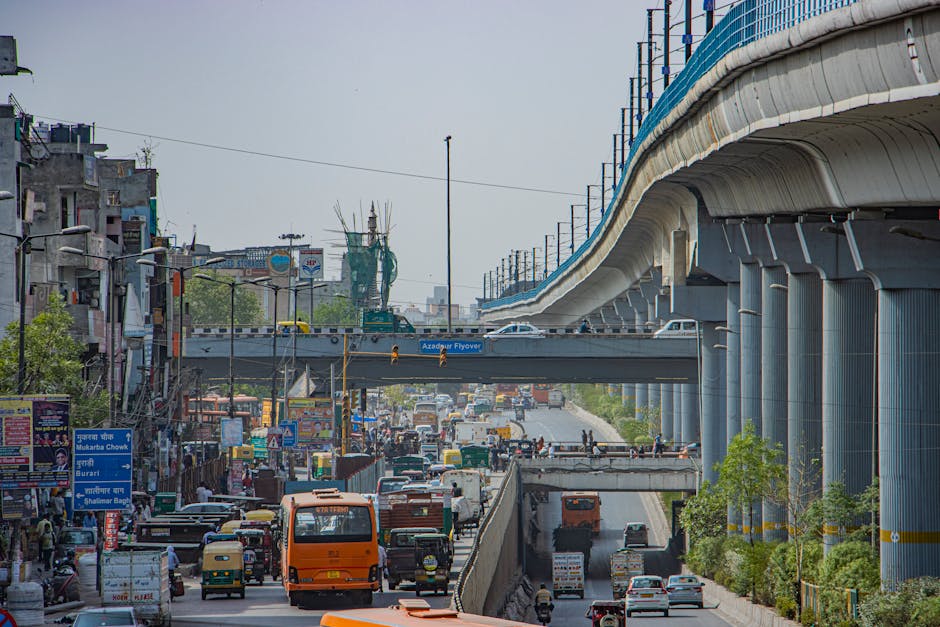
For millions of commuters, the 90-minute radius translates into a tangible improvement in the quality of life. Reduced travel times mean less time spent stuck in traffic and more time for family, leisure, or personal development. A resident of Meerut can now contemplate a job in Delhi, knowing their commute is manageable, rather than an arduous daily ordeal. This flexibility is empowering individuals to make housing choices based on affordability and lifestyle preferences, rather than being confined to expensive urban centers.
The psychological benefit of a shorter, more predictable commute is significant, contributing to reduced stress levels and improved well-being. It also enables a greater work-life balance, which is increasingly prioritized in modern urban living.
Businesses and Economic Decentralization
The extended NCR is opening up new avenues for businesses, particularly in logistics, warehousing, and manufacturing. The improved road and rail networks facilitate faster movement of goods, reducing operational costs and enhancing supply chain efficiency. Industrial corridors are emerging along the new expressways, attracting investments from various sectors. For example, areas along the Delhi-Mumbai Expressway are becoming hubs for logistics parks, serving as distribution centers for northern India.
This decentralization of economic activity is also reducing the concentrated pressure on Delhi's infrastructure and resources. Companies are finding it viable to set up offices and production units in these extended regions, benefiting from lower land costs, better connectivity, and a growing local talent pool. This fosters job creation in diverse geographies, contributing to more balanced regional development. The emergence of new economic centers also stimulates local economies, creating a multiplier effect on services, retail, and hospitality sectors.
Urban Planning and Governance Challenges
While the benefits are substantial, the rapid expansion also presents challenges for urban planning and governance. The NCR Planning Board (NCRPB) plays a crucial role in coordinating development across different states (Delhi, Haryana, Uttar Pradesh, Rajasthan). The new growth corridors necessitate robust master planning to ensure sustainable development, adequate civic infrastructure (water, sanitation, power), and preservation of green spaces. There is a need for harmonized policies across states to manage land use, environmental impact, and infrastructure provision effectively. Addressing issues like water scarcity, waste management, and equitable distribution of resources will be critical to the long-term success of the extended NCR vision.
What Next: Future Milestones and Sustained Growth
The journey to fully realize the potential of the 90-minute radius is ongoing, with several key milestones and future plans set to further cement its impact.
Completion of Ongoing Projects
The full operationalization of the Delhi-Ghaziabad-Meerut RRTS corridor is a major immediate milestone. Its completion will serve as a blueprint and a confidence booster for other planned RRTS corridors. Similarly, the full commissioning of the Dwarka Expressway and the remaining sections of the Delhi-Mumbai Expressway will unlock further connectivity benefits. The phased development of the Noida International Airport, with increasing passenger and cargo handling capacities, will continue to drive economic growth in its catchment area.
Further Infrastructure Expansion
Looking ahead, more RRTS corridors are envisioned to connect Delhi with other important regional towns, such as the proposed routes to Rohtak and other parts of Rajasthan. The network of expressways is also expected to expand, with new greenfield projects and upgrades to existing national highways. Focus will also be on developing dedicated freight corridors to further enhance logistics efficiency and support industrial growth. The integration of various modes of transport—metro, RRTS, expressways, and local road networks—will be critical for seamless last-mile connectivity.
NCR 2041 Plan: A Vision for Sustainable Growth
The NCR Planning Board's 'Regional Plan 2041' provides a comprehensive framework for the long-term sustainable development of the region. This plan emphasizes a multi-nodal growth strategy, focusing on environmental protection, smart infrastructure, and economic vibrancy. It aims to develop counter-magnet cities within the extended NCR to absorb population growth and reduce pressure on Delhi. The plan includes provisions for green corridors, water resource management, and climate-resilient urban planning, ensuring that growth is not just rapid but also sustainable.
Socio-Economic Shifts and Policy Adaptations
As the extended NCR matures, further socio-economic shifts are anticipated. The hybrid and remote work models, accelerated by recent global events, will likely find greater traction, leveraging the improved connectivity and affordability of peripheral towns. This could lead to a more distributed workforce and a reduction in peak-hour congestion. Policymakers will need to adapt to these evolving dynamics, fostering policies that support balanced development, attract investment, and ensure equitable access to services and opportunities across the entire 90-minute radius. The success of 'Delhi Ab Door Nahi' hinges not just on infrastructure, but on integrated planning and responsive governance that can harness its transformative potential for the benefit of all residents.
