
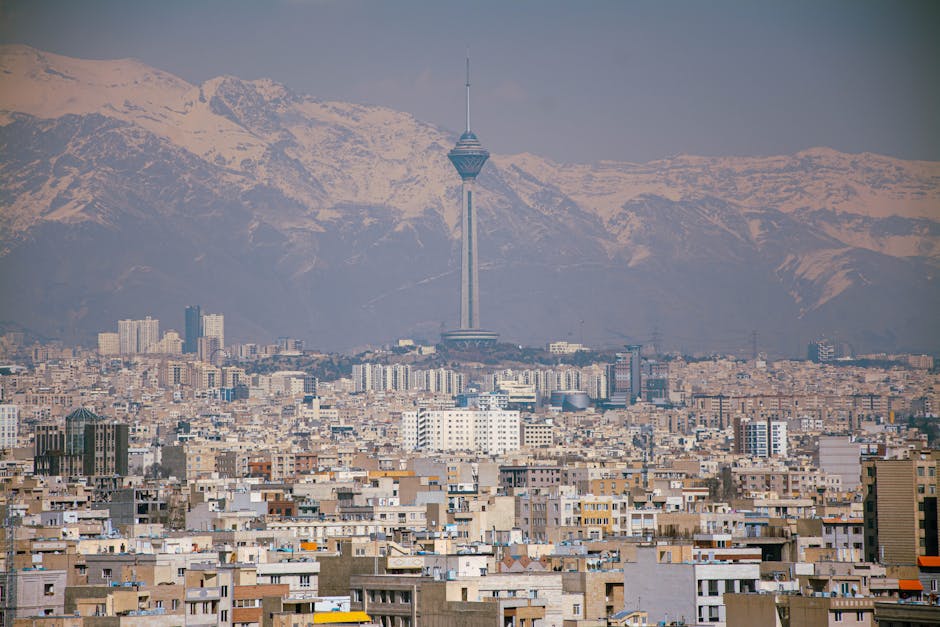
Tehran, Iran – Iran has confirmed it is reviewing the United States' response to a recent proposal aimed at de-escalating regional tensions, a move that comes amidst heightened animosity between Iran and Israel. This diplomatic development unfolds as the broader Middle East remains gripped by instability, with international efforts focusing on preventing a wider conflict.
Background: Decades of Deepening Rivalry
The current state of affairs between Iran and Israel is the culmination of decades of evolving geopolitical dynamics, transforming former allies into staunch adversaries. Following the 1979 Islamic Revolution in Iran, the Shah's pro-Western government was overthrown, leading to the establishment of an Islamic Republic that adopted an anti-Israel stance, viewing the Jewish state as an illegitimate entity and an extension of Western influence. This ideological shift laid the groundwork for a protracted rivalry.
The Nuclear Dimension
A significant flashpoint in this rivalry has been Iran's nuclear program. Concerns over Iran's uranium enrichment capabilities and its potential to develop nuclear weapons prompted international sanctions and diplomatic efforts. In 2015, the Joint Comprehensive Plan of Action (JCPOA), commonly known as the Iran nuclear deal, was signed between Iran and the P5+1 group (China, France, Germany, Russia, the United Kingdom, and the United States). The agreement imposed strict limits on Iran's nuclear activities in exchange for sanctions relief. However, in May 2018, the United States, under President Donald Trump, unilaterally withdrew from the JCPOA and reimposed stringent sanctions, arguing the deal was insufficient to curb Iran's broader malign activities. In response, Iran gradually began to roll back its commitments under the deal, increasing uranium enrichment levels and deploying advanced centrifuges, further intensifying international anxieties and Israeli security concerns.
Regional Proxy Conflicts
Iran's regional influence, often exerted through a network of proxy forces, has been a consistent source of friction with Israel and its allies. In Syria, Iran has provided extensive military and financial support to President Bashar al-Assad's regime throughout the civil war, deploying Islamic Revolutionary Guard Corps (IRGC) personnel and backing various Shiite militias. Israel has frequently conducted airstrikes in Syria, targeting Iranian assets, weapons convoys, and Hezbollah positions to prevent the establishment of a permanent Iranian military presence near its borders and to disrupt the transfer of advanced weaponry to Hezbollah in Lebanon.
Hezbollah, a powerful Lebanese Shiite political party and militant group, was founded with Iranian backing in the 1980s. It maintains a significant arsenal, including an estimated 150,000 rockets and missiles, and has engaged in numerous cross-border skirmishes with Israel. Iran's support for groups like Hamas and Palestinian Islamic Jihad (PIJ) in the Gaza Strip also fuels Israeli concerns about a multi-front threat.
Beyond the Levant, Iran is also accused of supporting Houthi rebels in Yemen, who have launched missile and drone attacks against Saudi Arabia and, more recently, targeted international shipping in the Red Sea following the October 7th, 2023, attacks in Israel. In Iraq, Iran-backed Shiite militias have frequently targeted U.S. forces and interests, further destabilizing the region.
Recent Direct Escalations
The conflict took a dramatic turn following the October 7th, 2023, attacks by Hamas on Israel and Israel's subsequent military operation in Gaza. This period saw a significant uptick in regional hostilities, including increased clashes between Israel and Hezbollah, Houthi attacks in the Red Sea, and strikes against U.S. bases in Iraq and Syria.
On April 1st, 2024, an Israeli airstrike on the Iranian consulate in Damascus, Syria, killed several senior IRGC commanders, including Brigadier General Mohammad Reza Zahedi, a key figure in the Quds Force. Iran vowed retaliation.
This culminated in an unprecedented direct attack by Iran on Israel on April 13th, 2024. Code-named "Operation True Promise," Iran launched hundreds of drones, cruise missiles, and ballistic missiles towards Israeli territory. The vast majority of these projectiles were intercepted by Israel's multi-layered air defense systems, with assistance from the United States, United Kingdom, France, and Jordan, resulting in minimal damage and no fatalities, though an Israeli Bedouin girl was severely injured.
Israel responded with a limited retaliatory strike on April 19th, 2024, targeting an airbase near Isfahan, Iran, which hosts facilities associated with Iran's nuclear program and air defense. The strike was reportedly precise and caused minimal damage, interpreted by many analysts as a signal of Israel's capability while seeking to avoid a wider escalation.
Key Developments: The Latest Diplomatic Push
In the aftermath of these direct exchanges, international efforts intensified to de-escalate tensions and prevent a full-scale regional war. It is within this context that the United States presented a proposal to Iran, to which Iran is now reviewing Washington's response.
The Nature of the Proposal
While the precise details of the proposal remain confidential, diplomatic sources suggest it likely focuses on a framework for de-escalation, regional security assurances, and potentially a pathway for renewed, albeit indirect, dialogue on Iran's nuclear program or its regional activities. Given the immediate preceding events, the primary objective would be to establish mechanisms to reduce the risk of direct military confrontation between Iran and Israel and to rein in proxy activities across the Middle East. It might also touch upon the Houthi attacks in the Red Sea and the humanitarian situation in Gaza, given their interconnectedness with regional stability.
The United States’ Role
The United States has played a dual role in this diplomatic initiative: as a key ally of Israel, providing military and diplomatic support, and as a direct interlocutor with Iran, albeit often through intermediaries. Washington has consistently affirmed its commitment to Israel's security while simultaneously urging restraint from both sides to avoid a broader conflict that could have catastrophic consequences for the region and global economy. The U.S. State Department and White House have been engaged in extensive diplomatic outreach, leveraging various channels to communicate with Tehran. This includes utilizing neutral third-party nations like Oman, Qatar, or Switzerland, which often facilitate communications between the two estranged nations.
Iran’s Review Process
Iran's announcement that it is reviewing the U.S. response indicates a cautious approach. Decisions of such magnitude typically involve multiple layers of the Iranian leadership, including the Supreme National Security Council, the Foreign Ministry, and ultimately, Supreme Leader Ayatollah Ali Khamenei. The review process entails assessing the proposal's implications for Iran's national security interests, its regional standing, and its ability to secure any desired concessions, such as sanctions relief or guarantees against future military action. The internal political dynamics, including the influence of hardliners within the IRGC and more pragmatic elements within the government, will heavily influence the final decision.
International Involvement
Beyond the direct U.S.-Iran channel, several international actors have been actively involved in pushing for de-escalation. United Nations Secretary-General António Guterres has repeatedly called for an immediate cessation of hostilities and adherence to international law. The European Union, through its High Representative for Foreign Affairs and Security Policy, Josep Borrell, has also maintained contact with Iranian officials, advocating for restraint and diplomatic solutions. The broader P5+1 nations, particularly Russia and China, maintain their own diplomatic lines with Iran, contributing to a complex web of negotiations and pressures.
Impact: Regional, Economic, and Humanitarian Consequences
The ongoing tensions and the outcome of the current diplomatic efforts carry profound implications across multiple spheres.
Regional Stability
A failure to de-escalate could plunge the Middle East into an unprecedented regional war. Such a conflict would likely draw in Lebanon, Syria, Iraq, and Yemen, exacerbating existing humanitarian crises and potentially creating new refugee flows. Countries like Jordan, which shares borders with both Israel and Syria, face immense pressure on their security and stability, having already served as a critical interception point during Iran's April 13th attack. Saudi Arabia and the UAE, while not directly involved in the recent exchanges, remain highly sensitive to regional instability, which could threaten their security and economic development plans. The prospect of a wider conflict also jeopardizes any remaining hopes for normalization between Israel and Arab states, such as those initiated by the Abraham Accords.
Global Economy
The economic ramifications of a full-blown conflict would be severe. The Middle East is a vital artery for global energy supplies, with the Strait of Hormuz, off Iran's coast, being a critical chokepoint through which approximately 20% of the world's petroleum liquids pass. Any disruption to this waterway would send oil prices soaring, triggering global inflation and potentially leading to a worldwide economic recession.
Furthermore, the Red Sea, a crucial shipping lane connecting Asia and Europe via the Suez Canal, has already seen significant disruptions due to Houthi attacks. A wider conflict would further imperil maritime trade, forcing ships to take longer, more expensive routes around Africa, increasing costs for consumers and businesses globally and straining supply chains already recovering from recent shocks. Investor confidence in the region would plummet, deterring much-needed foreign direct investment.
Diplomacy and International Law
The current crisis tests the limits of international diplomacy and the efficacy of existing frameworks for conflict resolution. The outcome of the U.S.-Iran proposal could either pave the way for a renewed focus on multilateral negotiations concerning regional security and nuclear proliferation or further erode trust and adherence to international norms. The role of the UN Security Council, often paralyzed by vetoes, is under scrutiny to demonstrate its capacity to act decisively in preventing war. The future of the JCPOA, already in tatters, also hangs in the balance, with a wider conflict potentially eliminating any chance of its revival.
Humanitarian Crisis
Beyond the geopolitical and economic considerations, the human cost of an escalated conflict would be devastating. Millions of civilians across the region are already suffering from ongoing conflicts, displacement, and food insecurity. A wider war would lead to mass casualties, further displacement, the destruction of critical infrastructure, and an exacerbation of humanitarian needs, overwhelming international aid organizations and resources.
Domestic Politics
The crisis also has significant implications for the domestic political landscapes of the involved nations. In Israel, Prime Minister Benjamin Netanyahu's government faces intense domestic pressure regarding security and the handling of the Gaza conflict, with calls for elections and protests against his administration. In Iran, the leadership faces the challenge of balancing hardline demands for confrontation with the need to alleviate economic hardship caused by sanctions and avoid a direct, potentially devastating war with superior military powers. In the United States, a presidential election year, the Biden administration navigates a complex foreign policy challenge that could significantly impact voter sentiment.
What Next: Pathways and Potential Pitfalls
The immediate future hinges on Iran's decision regarding the U.S. response to the proposal. Several scenarios could unfold, each with distinct implications for regional stability.
Iran’s Decision
Iran's leadership could accept the proposal, signalling a willingness to de-escalate and engage in further diplomatic dialogue. This might involve direct or indirect negotiations on specific points, potentially leading to a temporary ceasefire, a reduction in proxy activities, or even a return to some form of nuclear talks. Alternatively, Tehran could issue a counter-proposal, indicating areas of disagreement and seeking modifications that better align with its perceived national interests. The most concerning outcome would be a rejection of the proposal, which could be interpreted as a preference for maintaining a confrontational posture or a belief that further concessions are unlikely.
Diplomatic Pathways
Should Iran respond positively or with a constructive counter-proposal, the stage would be set for continued diplomatic engagement. This could involve intensified shuttle diplomacy by intermediaries, multilateral meetings involving regional and international powers, or even direct, albeit covert, talks between U.S. and Iranian officials. The involvement of neutral states like Oman or Qatar, which have historically facilitated dialogue, would remain crucial. The focus would be on building trust, establishing clear red lines, and defining mechanisms for crisis management to prevent future escalations.
Escalation Risks
If diplomatic efforts falter, the risk of renewed escalation remains high. This could manifest in various forms:
* Renewed Direct Strikes: Either Israel or Iran could choose to launch further direct military actions, potentially targeting critical infrastructure or military assets.
* Increased Proxy Activity: Iran might instruct its proxy groups to intensify attacks against Israeli or U.S. interests across the region, including in Iraq, Syria, Lebanon, or via Houthi actions in the Red Sea.
* Cyber Warfare: Both sides possess significant cyber capabilities, and an escalation could see an increase in cyberattacks targeting critical infrastructure or government systems.
* Nuclear Program Advancement: Iran could further accelerate its nuclear program, reducing its breakout time for a nuclear weapon, which would trigger a severe international response.
International Community’s Role
The international community, particularly the UN Security Council and the IAEA, will continue to play a vital role. The IAEA will monitor Iran's nuclear activities, providing crucial intelligence. The Security Council, despite its divisions, may be called upon to pass resolutions urging restraint or imposing further sanctions if the situation deteriorates. Global powers will also continue to use economic leverage and diplomatic pressure to influence the actions of both Iran and Israel.
Key Players to Watch
Observers will closely watch statements and actions from key leaders: U.S. President Joe Biden, Iranian Supreme Leader Ayatollah Ali Khamenei, Iranian President Ebrahim Raisi, and Israeli Prime Minister Benjamin Netanyahu. The internal political dynamics within each nation, particularly the influence of hardline factions, will be critical in shaping their respective responses. The positions of regional powers like Saudi Arabia and the UAE, and their willingness to engage in de-escalation efforts, will also be significant.
As Iran weighs its response, the world watches with bated breath, hoping for a diplomatic breakthrough that can avert a wider, devastating conflict in an already volatile region. The stakes are profoundly high, not just for the Middle East, but for global peace and economic stability.
