
On August 24, 2006, the International Astronomical Union (IAU), meeting in Prague, Czech Republic, made a landmark decision that redefined our solar system, reclassifying Pluto from a planet to a dwarf planet. This pivotal moment, while controversial among the public, stands as a testament to the dynamic and evolving nature of scientific understanding. The decision underscored that scientific definitions are not static but adapt as new data and observations emerge, shaping our comprehension of the cosmos.
Background: A Century of Discovery and Shifting Perspectives
Pluto's journey began in 1930 when young astronomer Clyde Tombaugh discovered it at the Lowell Observatory in Flagstaff, Arizona. Its discovery was a celebrated event, filling the void for a "Planet X" whose gravitational influence was thought to be perturbing Neptune's orbit. Initially hailed as the ninth planet, early estimates of its size were significantly overestimated, with some astronomers believing it to be larger than Earth. These initial observations, hampered by limitations in telescopic technology, contributed to its immediate acceptance into the planetary family.
As observational capabilities improved over the decades, Pluto's true nature began to emerge. By the 1970s, it was understood to be much smaller than initially thought, even smaller than Earth's Moon. The discovery of its large moon, Charon, in 1978 by James Christy at the U.S. Naval Observatory, allowed for more precise mass calculations, confirming its relatively diminutive stature. This revelation was the first crack in Pluto's planetary status, suggesting it might be an outlier among the gas giants and terrestrial planets.
The true catalyst for re-evaluation, however, came with the burgeoning exploration of the outer solar system. In the early 1990s, astronomers began to discover a vast population of icy bodies beyond Neptune, forming what is now known as the Kuiper Belt. This region, theorized by Gerard Kuiper decades earlier, was found to be teeming with thousands of objects, many of them sharing characteristics with Pluto. The first confirmed Kuiper Belt Object (KBO), 1992 QB1, was identified in 1992, opening a new frontier in solar system exploration. As more and more KBOs were cataloged, some were found to be substantial in size, further blurring the line between Pluto and its icy neighbors.
The situation reached a critical point in 2005 with the discovery of Eris by a team led by Mike Brown at Caltech. Eris was unambiguously larger and more massive than Pluto, orbiting the Sun at an even greater distance. This discovery presented a stark dilemma: if Pluto remained a planet, then Eris, and potentially dozens of other similarly sized objects in the Kuiper Belt, would also have to be classified as planets. This prospect threatened to swell the number of planets in our solar system to an unwieldy and unmanageable figure, challenging the very definition of what constituted a planet. The scientific community recognized the urgent need for a clear, universally accepted definition.
Key Developments: The IAU’s Definitive Stance
The International Astronomical Union, established in 1919, serves as the global authority responsible for naming celestial objects and defining astronomical standards. Recognizing the escalating debate and the scientific imperative for clarity, the IAU convened its 26th General Assembly in Prague in August 2006. The issue of planetary definition became the central focus, drawing astronomers from around the world into intense discussions and debates.
Several proposals for a new planetary definition were put forth. Some favored a broad "geophysical" definition, which would classify any celestial body massive enough to be rounded by its own gravity as a planet, regardless of its orbital environment. This approach would have kept Pluto as a planet and added many more, including Ceres (the largest asteroid) and Eris. Other proposals leaned towards a more restrictive "dynamical" definition, emphasizing a body's dominance within its orbital path.
After days of fervent discussion, often marked by deep scientific disagreement, the IAU ultimately adopted Resolution 5A on August 24, 2006. This resolution established a three-part definition for a "planet" within our solar system:
It must be in orbit around the Sun.
It must have sufficient mass for its self-gravity to overcome rigid body forces so that it assumes a hydrostatic equilibrium (nearly round) shape.
It must have cleared the neighbourhood around its orbit.
A new category, "dwarf planet," was also defined under Resolution 6A, for celestial bodies that meet the first two criteria but have not cleared their orbital neighborhood. Additionally, a third category, "Small Solar System Bodies," was created for all other objects orbiting the Sun that are not planets or dwarf planets.
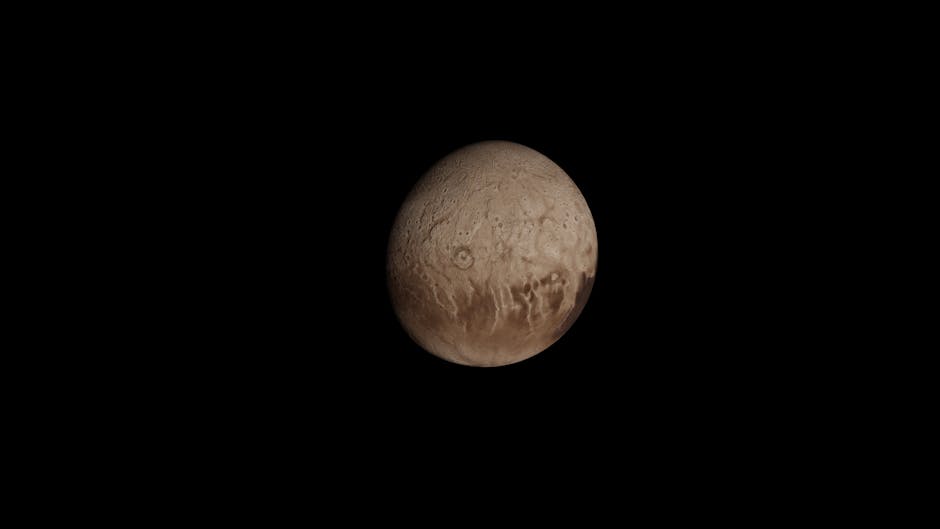
Pluto, while satisfying the first two criteria (it orbits the Sun and is nearly round), crucially failed the third. Its orbit lies within the densely populated Kuiper Belt, a region shared with countless other objects, meaning it has not gravitationally cleared its orbital path of other significant bodies. Consequently, Pluto was reclassified as a dwarf planet. Ceres, previously considered an asteroid, and Eris were also immediately designated as dwarf planets. Later, Makemake and Haumea joined this new class, bringing the initial count of dwarf planets to five. This decision, though controversial, provided a rigorous framework for understanding the architecture of our solar system and classifying its diverse inhabitants based on observable physical characteristics and orbital dynamics.
Impact: Redefining Our Cosmic View
The reclassification of Pluto sent ripples throughout the scientific community, public consciousness, and educational systems worldwide. For astronomers, the decision provided a much-needed, consistent framework for categorizing celestial bodies, particularly in the outer solar system. It resolved the ambiguity created by the discovery of Eris and the growing number of large Kuiper Belt Objects, allowing for a more precise understanding of planetary formation and evolution. The new definition clarified that planets are not just large, round objects, but also dynamically dominant forces within their orbital zones.
However, the public reaction was largely one of surprise, disappointment, and even outrage. Pluto had been ingrained in popular culture for generations, featured in textbooks, mnemonic devices, and even Disney characters. Many felt a sense of loss, a nostalgic attachment to the "ninth planet" of their childhood. Petitions were launched, songs were written, and the phrase "Justice for Pluto" became a rallying cry for those who felt the decision was arbitrary or unfair. This emotional response highlighted the deep connection humanity feels to its cosmic neighborhood and how scientific changes can intersect with cultural identity.
The educational sector faced the immediate challenge of updating curricula, textbooks, and teaching materials. Educators had to explain not just the new classification but also the scientific process behind it – how new discoveries can lead to a re-evaluation of long-held beliefs. This provided a valuable opportunity to teach students about the dynamic nature of science, emphasizing that scientific understanding is not static but evolves with new evidence and improved methodologies. Museums and planetariums also adapted their exhibits, explaining the rationale behind the IAU's decision and the characteristics of dwarf planets.
Beyond the initial public outcry, the reclassification spurred a deeper public interest in planetary science. It prompted questions about what makes a planet, how solar systems form, and the vast diversity of objects in space. While the emotional debate has largely subsided, Pluto's demotion remains a potent symbol of how scientific consensus, driven by empirical evidence, can reshape our fundamental understanding of the universe, even when it challenges deeply held cultural perceptions.
What Next: Ongoing Exploration and Evolving Definitions
Despite its reclassification, Pluto continues to be a subject of intense scientific interest and exploration. The New Horizons mission, launched in 2006 (the same year as Pluto's demotion), provided unprecedented insights into the dwarf planet. In July 2015, New Horizons performed a historic flyby, revealing a surprisingly active and geologically complex world with mountains of water ice, vast nitrogen glaciers, and a hazy atmosphere. The mission continued its journey, flying past Arrokoth (a contact binary KBO) in 2019, further expanding our understanding of the Kuiper Belt's diverse inhabitants. These missions underscore that even as a dwarf planet, Pluto holds invaluable clues about the early solar system.
While the IAU's definition of a planet is widely accepted, the debate among some scientists persists. A minority, notably including Alan Stern, the principal investigator for the New Horizons mission, continues to advocate for a broader, geophysical definition of a planet. Their argument posits that any celestial body that is massive enough to be rounded by its own gravity should be considered a planet, irrespective of its orbital environment. Under this definition, Pluto would indeed remain a planet, alongside Ceres, Eris, and potentially hundreds of other objects in our solar system. However, this view has not gained sufficient traction within the IAU to warrant a re-evaluation of the 2006 resolution.
The discussion surrounding Pluto also highlights the different approaches to defining "planet" in various astronomical contexts. For instance, the definition of an "exoplanet" (a planet orbiting a star other than our Sun) is less stringent, primarily due to the observational challenges of detecting distant worlds. Exoplanets are generally defined by their mass (below the deuterium fusion limit) and their orbit around a star or stellar remnant, without the requirement of having cleared their orbit. This disparity illustrates that scientific definitions can be pragmatic and context-dependent, tailored to the available observational data and the specific questions being addressed.
Ultimately, the story of Pluto's reclassification serves as a powerful illustration of how science works. It demonstrates that scientific knowledge is not static; it is a dynamic process of observation, hypothesis, testing, and refinement. New discoveries can challenge existing paradigms, leading to rigorous debate, re-evaluation, and the establishment of new, more precise definitions. This iterative process, driven by empirical evidence and collective consensus, is fundamental to the advancement of human understanding, continuously expanding our knowledge of the universe and our place within it.
