
Geopolitical expert Ian Bremmer recently characterized the United States' strategy concerning Venezuela not as a calculated "regime change" but rather as "regime roulette." Speaking to NDTV, the Eurasia Group president highlighted the unpredictable nature and potential instability inherent in Washington's approach to the South American nation's complex political crisis. This assessment underscores a growing recognition of the multifaceted and often unintended consequences of external interventions in deeply entrenched domestic power struggles.
Background: A Decade of Turmoil and US Pressure
Venezuela's current crisis is the culmination of years of political polarization, economic mismanagement, and escalating international pressure. The seeds were sown during the presidency of Hugo Chávez, who, from 1999 to 2013, established the "Bolivarian Revolution," nationalizing key industries, expanding social programs, and often adopting an anti-U.S. stance. His charismatic leadership and control over the state oil company, PDVSA, allowed him to consolidate power and foster a strong base of support, even as his policies drew criticism from the opposition and international observers.
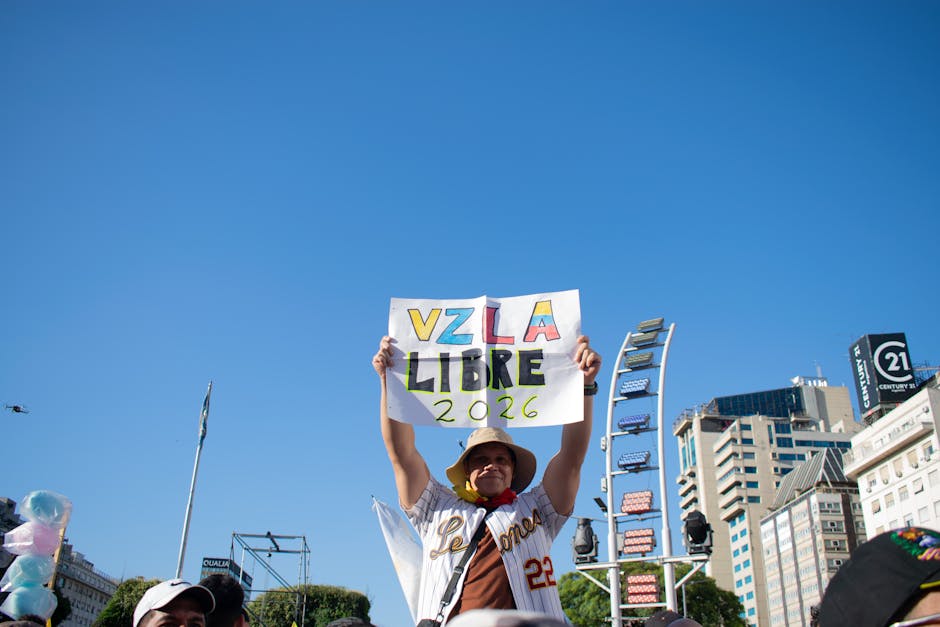
The Chávez Legacy and Bolivarian Revolution
Chávez leveraged Venezuela's vast oil reserves to fund his socialist programs, significantly reducing poverty in the early years but also centralizing economic control. His confrontational rhetoric towards the United States and alliances with countries like Cuba, Russia, and China marked a significant shift in Venezuela's foreign policy. Domestically, he reformed the constitution, weakening institutional checks and balances, and cultivated a loyal military. This era laid the groundwork for the deep political divisions that persist today, with a fiercely loyal Chavista base facing a fragmented but determined opposition.
Maduro’s Succession and Economic Collapse
Upon Chávez's death in March 2013, his handpicked successor, Nicolás Maduro, narrowly won the presidential election, a result immediately disputed by the opposition. Maduro inherited a country heavily reliant on oil revenue, but without Chávez's charisma or the same high oil prices. Venezuela's economic fortunes began to plummet dramatically with the global oil price crash in 2014. This decline exposed the fragility of the state-controlled economy, leading to hyperinflation, severe shortages of food, medicine, and basic goods, and a collapse of public services. The economic crisis triggered a massive humanitarian emergency, prompting millions of Venezuelans to flee the country, creating one of the largest displacement crises in recent history.
Escalating US Sanctions and Diplomatic Isolation
The United States, under both the Obama and Trump administrations, steadily increased pressure on the Maduro government, citing human rights abuses, democratic backsliding, and corruption. Initial sanctions targeted individuals involved in alleged abuses. However, under President Donald Trump, the scope expanded dramatically, culminating in a full oil embargo in January 2019, aimed at cutting off the Maduro government's primary source of revenue. These sanctions, coupled with diplomatic efforts to isolate Maduro, including the recognition of Juan Guaidó as interim president, marked a period of intense external pressure designed to force a change in leadership.
The Rise of Juan Guaidó
In January 2019, Juan Guaidó, then president of the opposition-controlled National Assembly, invoked constitutional articles to declare himself interim president, arguing that Maduro's 2018 re-election was illegitimate. He quickly gained recognition from the United States and dozens of other countries, including most of the Lima Group nations in Latin America. This move was intended to galvanize internal opposition and provide a clear alternative to Maduro. Despite significant international backing and several attempts to spark a military uprising, Guaidó ultimately failed to dislodge Maduro, whose control over the military and state institutions proved resilient. The opposition's unity also began to fray, and public support for Guaidó waned over time.
Key Developments: The Shifting Sands of Strategy
The period since 2019 has seen a complex evolution in both Venezuela's internal dynamics and the international community's approach, particularly from the United States. Ian Bremmer's "regime roulette" assessment reflects this fluidity and the lack of a predictable trajectory.
Biden Administration’s Calibrated Approach
Upon assuming office in January 2021, the Biden administration signaled a shift from the Trump era's maximalist pressure campaign. While maintaining sanctions and reaffirming support for democratic principles, the Biden team adopted a more calibrated strategy, emphasizing diplomacy and multilateral engagement. The rhetoric of explicit "regime change" became less prominent, replaced by a focus on facilitating negotiations between the Maduro government and the opposition, with the ultimate goal of free and fair elections. This approach acknowledged the failure of previous strategies to remove Maduro and sought a more pragmatic path towards a democratic transition.
Sanctions Relief and Diplomatic Gambits
A key component of the Biden administration's strategy has been the conditional easing of sanctions, particularly those related to Venezuela's vital oil sector. In November 2022, the U.S. Treasury Department issued General License 41, authorizing Chevron to resume limited oil extraction operations in Venezuela, following an agreement between the Maduro government and the opposition to resume political dialogue in Mexico City. Further licenses, such as General License 44 in October 2023, broadly authorized transactions involving Venezuela's oil, gas, and gold sectors for six months, contingent on progress towards democratic elections, including the lifting of bans on opposition candidates. This "carrot and stick" approach aims to incentivize the Maduro government to make concessions towards a more democratic electoral process.
The Opposition’s Internal Struggles and Disqualifications
While international pressure and dialogue attempts have continued, the Venezuelan opposition has faced significant internal challenges. Divisions among factions, a lack of cohesive strategy, and the erosion of public trust have hampered their effectiveness. A major blow came with the disqualification of leading opposition figures from holding public office. Most notably, María Corina Machado, who overwhelmingly won the opposition's primary election in October 2023, was barred by the Venezuelan Supreme Tribunal of Justice from running for president. This move, widely condemned internationally, cast a shadow over the prospects for genuinely competitive elections and directly challenged the conditions set by the U.S. for continued sanctions relief.
The Esequibo Territorial Dispute
Adding another layer of complexity to Venezuela's geopolitical landscape is the renewed territorial dispute with neighboring Guyana over the Esequibo region. In December 2023, Venezuela held a controversial referendum asserting its claim over the resource-rich territory, which constitutes two-thirds of Guyana. This move, viewed by many as a distraction from internal issues and a potential source of regional instability, has raised concerns about military escalation and drawn international attention, including from the United States, which has reiterated its support for Guyana's sovereignty. The dispute complicates regional stability and potentially shifts international focus, making the path forward even less predictable.
Impact: A Web of Consequences
The ongoing crisis and the international community's responses have had far-reaching impacts, affecting millions of Venezuelans, regional stability, and the broader geopolitical landscape.
Humanitarian Crisis and Mass Migration
The most devastating impact has been on the Venezuelan population. Years of economic collapse have led to widespread poverty, food insecurity, and a severe healthcare crisis. An estimated 7.7 million Venezuelans have fled the country since 2015, seeking refuge and opportunities in neighboring countries like Colombia, Peru, and Ecuador, as well as further afield. This mass exodus has strained resources in host nations and created immense social challenges across Latin America, making it the largest displacement crisis in the Western Hemisphere. The effectiveness and ethics of sanctions in this context remain a contentious debate, with proponents arguing they target the regime and critics pointing to their exacerbating effect on the general population.
Regional Instability and Geopolitical Chessboard
Venezuela's crisis has destabilized the entire region. The migration crisis has fueled xenophobia and overwhelmed social services in host countries. The breakdown of state control in some border areas has also created fertile ground for illicit activities, including drug trafficking, illegal mining, and the operations of armed groups. Geopolitically, Venezuela has become a battleground for influence. Russia and China remain key allies and creditors of the Maduro government, providing diplomatic support and financial lifelines, often in exchange for oil and other resources. Cuba also maintains a strong political and military advisory presence. This engagement complicates U.S. efforts and highlights the limits of Washington's leverage.
US Foreign Policy Credibility and Evolving Dynamics
For the United States, the Venezuelan situation has been a test of its foreign policy tools and credibility. The failure of "regime change" efforts under the Trump administration underscored the limitations of unilateral pressure. The Biden administration's pivot towards conditional engagement reflects a recognition of these challenges, but also carries its own risks. The "regime roulette" described by Bremmer suggests that without a clear, achievable objective and a well-defined off-ramp, U.S. actions could inadvertently lead to further instability, entrenchment of the current regime, or even a more authoritarian outcome, rather than a democratic transition. The Esequibo dispute, for instance, could shift U.S. focus from democracy promotion to regional security concerns.
What Next: Navigating the Uncertain Future
The path forward for Venezuela remains highly uncertain, with several critical junctures and potential scenarios that could shape its future. Bremmer's assessment emphasizes that outcomes are far from predetermined.
The Pivotal 2024 Presidential Election
The most immediate and significant milestone is the presidential election scheduled for 2024. The conditions under which this election will be held are paramount. The opposition's ability to field a unified candidate, the lifting of disqualifications for figures like María Corina Machado, and guarantees of free and fair electoral processes (including international observation) are crucial. Should the Maduro government fail to meet these conditions, the U.S. has threatened to reimpose sanctions, potentially escalating tensions and further isolating Venezuela. Conversely, a genuinely competitive and transparent election could pave the way for a more stable political transition and potential sanctions relief.
Prospects for Dialogue and International Mediation
The on-again, off-again negotiations between the Maduro government and the opposition, primarily facilitated by Norway in Mexico City, remain a key mechanism for de-escalation and potential breakthroughs. The future of these talks hinges on the willingness of both sides to make concessions and the ability of international mediators to bridge deep-seated distrust. Any progress on electoral conditions, humanitarian aid, or prisoner releases would likely come through such diplomatic channels. However, the history of failed agreements and last-minute withdrawals suggests that sustained progress is difficult to achieve.
Navigating the Esequibo Impasse
The Esequibo territorial dispute with Guyana presents a significant wildcard. The International Court of Justice (ICJ) is currently reviewing the matter, but Venezuela has rejected its jurisdiction. The potential for military escalation, even if limited, could divert attention from internal political issues and further complicate regional security. The U.S. and regional powers will likely continue to advocate for a peaceful, diplomatic resolution, but the dispute's outcome could influence Venezuela's international standing and its relations with key neighbors.
Evolution of US Policy and Global Dynamics
The U.S. approach to Venezuela will likely continue to evolve, adapting to internal developments, regional dynamics, and broader geopolitical shifts. The "regime roulette" implies that Washington's strategy may remain reactive and opportunistic, rather than following a rigid long-term plan. The balance between maintaining pressure and incentivizing dialogue will be a continuous challenge. Furthermore, the roles of Russia, China, and other international actors will continue to shape Venezuela's trajectory, potentially limiting the effectiveness of U.S. and Western influence. The economic recovery, particularly in the oil sector, will also depend on political stability and the willingness of international investors to re-engage, creating a feedback loop between politics and economics. The millions of Venezuelan migrants will also be watching closely, as any significant shift could impact their prospects for return or further integration into host countries.
