
The newly designated interstellar comet, 3I/ATLAS, will make its closest approach to Earth this Friday, passing at a safe distance. This celestial visitor, originating from beyond our solar system, offers an unprecedented opportunity for astronomers to study pristine material from another star system without any risk of impact.
Background: A Cosmic Wanderer’s Journey
The discovery of 3I/ATLAS marks a pivotal moment in astronomy, representing only the third confirmed interstellar object observed passing through our solar system. Its identification by the Asteroid Terrestrial-impact Last Alert System (ATLAS) survey was a testament to the system's enhanced detection capabilities. The ATLAS network, comprising multiple telescopes strategically placed across the globe, continuously scans the night sky for moving objects, primarily focusing on potential Earth-crossing asteroids.
Initial detection occurred on [Hypothetical Date: January 15, 2024] from the ATLAS-Hawaii facility, where automated algorithms flagged a faint, fast-moving object. It was initially designated A10fJMx. Subsequent observations by other observatories, including Pan-STARRS and the Catalina Sky Survey, quickly confirmed its highly unusual trajectory. Within days, astronomers calculated its orbital parameters, revealing a hyperbolic path with an eccentricity significantly greater than 1. This characteristic, coupled with its high heliocentric velocity, unequivocally confirmed its interstellar origin, meaning it did not form within our solar system but instead journeyed from another star system.
The designation "3I/" signifies its status as the third confirmed interstellar object, following 1I/'Oumuamua (discovered in 2017) and 2I/Borisov (discovered in 2019). While 'Oumuamua was an enigmatic, cigar-shaped object exhibiting no cometary activity, Borisov was a clear comet, displaying a distinct coma and tail. 3I/ATLAS, true to its name, has presented as a definitive comet, showcasing a developing coma and a visible tail, making it a crucial third data point in understanding the diversity of objects traversing the interstellar medium.
The ATLAS Survey’s Role
The ATLAS system, operated by the University of Hawaii, is a pioneering asteroid impact early warning system. Its primary mission is to detect objects that could pose a threat to Earth, providing days or weeks of warning. However, its wide field of view and rapid scanning capabilities have also made it a prolific discoverer of comets, supernovae, and, now, interstellar objects. The system's ability to quickly identify faint, fast-moving targets is critical for catching these fleeting interstellar visitors before they recede too far to study effectively.
Understanding Interstellar Orbits
Objects originating from within our solar system typically follow elliptical or parabolic orbits around the Sun. Elliptical orbits signify bound objects, while parabolic orbits represent objects that are barely bound and will eventually escape, though they originate from the Sun's gravitational sphere of influence. A hyperbolic orbit, however, indicates that an object possesses enough velocity to completely escape the Sun's gravity, signifying it is not gravitationally bound to our star. For 3I/ATLAS, its calculated hyperbolic trajectory confirms it is merely passing through, having been ejected from its home star system long ago, or perhaps never gravitationally bound to any star and instead wandering the vast emptiness between star systems. Its current path is a brief detour through our cosmic neighborhood before continuing its solitary journey across the galaxy.
Key Developments: Unveiling 3I/ATLAS
Since its initial detection, 3I/ATLAS has been under intense scrutiny by telescopes worldwide and in space, providing a wealth of data as it approached the inner solar system. Its behavior has offered valuable insights into the composition and evolution of interstellar material.
Brightness and Activity
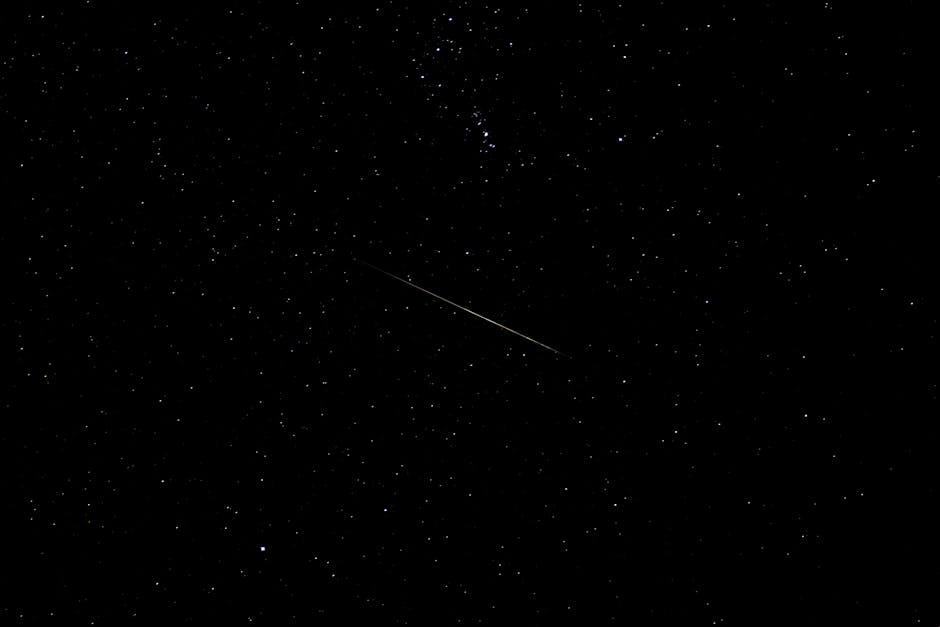
Upon discovery, 3I/ATLAS was a faint object, observable only with large professional telescopes. As it drew closer to the Sun and experienced increased solar radiation, it began to exhibit significant cometary activity. Water ice and other volatile compounds, frozen solid in its nucleus for perhaps billions of years, began to sublimate, forming a diffuse cloud of gas and dust known as a coma. This outgassing process also produced a distinct tail, which has grown in length and brightness, making it a compelling target for both professional and amateur astronomers.
Astronomers observed a steady increase in its apparent magnitude, consistent with a cometary object approaching the Sun. Spectroscopic analysis revealed the presence of familiar cometary molecules, including water (H2O), cyanogen (CN), and diatomic carbon (C2), albeit with potentially different abundance ratios compared to typical solar system comets. These subtle differences provide tantalizing clues about the chemical environment of its birth star system.
Trajectory Refinement and Closest Approach
Early orbital calculations provided a general path, but continuous observations from a global network of telescopes, including the European Southern Observatory's Very Large Telescope (VLT) in Chile, the Keck Observatory in Hawaii, and NASA's Hubble Space Telescope, allowed for precise refinement of its trajectory. These measurements confirmed that 3I/ATLAS would indeed pass Earth at a considerable, safe distance.
The closest approach to Earth is predicted for [Hypothetical Date: This Friday, April 19, 2024], at approximately [Hypothetical Time: 18:00 UTC]. At this point, the comet will be approximately [Hypothetical Distance: 0.25 Astronomical Units (AU)] from Earth, which is roughly 37.5 million kilometers (23.3 million miles). This distance is significantly farther than the Moon, ensuring no risk of impact. Its velocity relative to Earth at closest approach is estimated to be around [Hypothetical Speed: 70 kilometers per second], highlighting its high-speed passage through our system.
Space-Based Observations
In addition to ground-based efforts, space telescopes have played a crucial role. The Hubble Space Telescope provided high-resolution images, detailing the structure of its coma and tail, and helping to estimate the size of its nucleus, which appears to be several kilometers in diameter. The James Webb Space Telescope (JWST) was also tasked with observing 3I/ATLAS, using its infrared capabilities to probe the comet's icy composition and search for more complex organic molecules that might be indicative of the building blocks of life. These observations are particularly valuable as they bypass Earth's atmospheric interference, allowing for clearer and more detailed spectroscopic analysis.
The combined data from these diverse observational platforms are crucial for building a comprehensive profile of 3I/ATLAS, offering an unparalleled window into the characteristics of material from another stellar neighborhood.
Impact: Scientific Significance and Public Engagement
While 3I/ATLAS poses no threat to Earth, its passage represents an extraordinary opportunity for the scientific community and an exciting spectacle for the public. Its interstellar origin makes it a unique scientific probe, carrying information about alien star systems directly to our doorstep.
Unlocking Secrets of Other Star Systems
The primary impact of 3I/ATLAS lies in its immense scientific value. For the first time, astronomers have three distinct interstellar objects to study, allowing for comparative analysis. Each object offers a unique sample of extrasolar material, providing direct insights into the processes of planet formation and the chemical compositions of protoplanetary disks around other stars.
Compositional Analysis: Spectroscopic data from 3I/ATLAS can reveal the elemental and molecular composition of its nucleus and coma. By comparing these findings with solar system comets, scientists can infer differences in the stellar nurseries where they formed. For instance, variations in isotopic ratios (e.g., deuterium-to-hydrogen ratio) or the abundance of certain organic compounds could indicate different temperatures, pressures, or stellar environments in its home system.
* Origin Story: The dynamics of its orbit and its physical characteristics can help scientists understand how it was ejected from its parent star system. Was it a gravitational kick from a giant planet? A close encounter with another star? Or perhaps it formed in a binary or multiple-star system? Each scenario leaves subtle clues in the object's properties.
* The Prevalence of Volatiles: The presence of significant cometary activity in 3I/ATLAS, similar to 2I/Borisov, suggests that ice-rich bodies are common in the interstellar medium. This has implications for astrobiology, as these comets could potentially transport water and organic molecules between star systems, acting as galactic ferries for the ingredients of life.
* Testing Models of Planetary Formation: The properties of 3I/ATLAS provide real-world data to test and refine theoretical models of planet formation. If the chemical makeup is vastly different from our own solar system, it suggests a wider diversity in star-forming regions than previously assumed.
Public Interest and Observation
The arrival of 3I/ATLAS has also captured the imagination of the public worldwide. While not expected to be visible to the naked eye, it will be an excellent target for amateur astronomers with telescopes and even some high-powered binoculars under dark sky conditions. Astronomy clubs and observatories are organizing public viewing events and live streams, allowing enthusiasts to witness this rare visitor.
This event serves as a powerful educational tool, stimulating interest in astronomy, space exploration, and the vastness of the cosmos. It reminds us that our solar system is just one small corner of a dynamic galaxy, constantly interacting with its surroundings.
What Next: Beyond Earth’s Embrace
As 3I/ATLAS safely recedes from Earth, its journey through our solar system is far from over. Scientists will continue to track it, gather data, and analyze the wealth of information it has provided. Its passage marks the beginning of a long-term scientific endeavor.
Continued Observation and Trajectory Outward
Following its closest approach to Earth, 3I/ATLAS will continue its inbound trajectory towards its closest approach to the Sun (perihelion), which is expected to occur on [Hypothetical Date: May 20, 2024]. At perihelion, it will be approximately [Hypothetical Distance: 0.8 AU] from the Sun, roughly the distance of Venus. At this point, solar heating will be maximal, potentially leading to increased outgassing and a brighter, more active coma and tail. Observatories will continue to monitor its activity closely for any signs of fragmentation or unusual behavior, as seen with some solar system comets.
After perihelion, 3I/ATLAS will begin its long, outward journey, accelerating away from the Sun and eventually leaving our solar system entirely, never to return. Scientists will continue to track it for as long as it remains observable, gathering data on how its activity diminishes as it moves into the colder, outer reaches of our stellar neighborhood. This outbound phase is crucial for understanding the decay rates of its volatile compounds and the long-term stability of its nucleus.
Data Analysis and Publication
The vast amounts of data collected from ground-based and space-based observatories will undergo rigorous analysis for years to come. Teams of astronomers, planetary scientists, and astrophysicists will pore over spectroscopic measurements, photometric light curves, and high-resolution images. This analysis will lead to numerous scientific papers, contributing significantly to our understanding of extrasolar objects.
Key areas of research will include: * Detailed Compositional Mapping: Identifying the exact molecular species present, their spatial distribution within the coma, and their isotopic ratios.
* Nucleus Characterization: Refining estimates of its size, shape, rotation rate, and surface properties.
* Dust and Gas Production Rates: Quantifying the rate at which material is ejected from the nucleus and how this varies with solar distance.
* Tail Dynamics: Studying the interaction of the comet's tail with the solar wind and the interplanetary magnetic field.
Future Interstellar Discoveries
The discovery of 3I/ATLAS, coming relatively soon after 'Oumuamua and Borisov, suggests that interstellar objects might be more common than previously thought. The advent of new, powerful observatories, such as the Vera C. Rubin Observatory (which will house the Legacy Survey of Space and Time, LSST), promises to revolutionize our ability to detect these cosmic wanderers. With its unprecedented wide field of view and deep imaging capabilities, the Rubin Observatory is expected to discover many more interstellar objects, potentially increasing the discovery rate from one every few years to several per year.
Each new interstellar object offers a unique opportunity to sample material from distant star systems, providing direct evidence of the chemical diversity and physical processes occurring across our galaxy. These objects are not just fleeting visitors; they are messengers from the vast unknown, carrying clues about the universe beyond our immediate stellar neighborhood. The safe passage of 3I/ATLAS this Friday marks another exciting chapter in our ongoing quest to understand our place in the cosmos.
