
Prime Minister Narendra Modi recently toured the iconic Afsluitdijk Dam in the Netherlands, a monumental structure renowned globally for its engineering prowess and pivotal role in Dutch water management. This visit underscored the dam's international significance as a symbol of human resilience against nature and a testament to innovative infrastructure development.
Background: A Nation Forged by Water
The Netherlands, a country where much of its land lies below sea level, has a profound and often challenging relationship with water. For centuries, the Dutch have engineered elaborate systems of dikes, dams, and polders to reclaim land from the sea and protect their communities from devastating floods. The Afsluitdijk stands as the crown jewel of these efforts, a project of unprecedented scale and ambition.
The Vision of Cornelis Lely
The concept for the Afsluitdijk originated with civil engineer Cornelis Lely, who first presented a detailed plan for closing off the Zuiderzee (Southern Sea) in 1891. His vision, initially met with skepticism due to its immense scope and cost, gained traction after the catastrophic North Sea flood of 1916. This disaster highlighted the urgent need for comprehensive flood protection and solidified public and political support for Lely's audacious plan. The Zuiderzee Act, authorizing the project, was finally passed in 1918.
The Zuiderzee Works: A Grand Design
The Afsluitdijk was the cornerstone of the larger Zuiderzee Works, a monumental series of hydraulic engineering projects designed to tame the Zuiderzee. The primary goals were twofold: to protect the central Netherlands from the North Sea and to create new agricultural land through land reclamation. This transformation would also convert the saltwater Zuiderzee into a freshwater lake, the IJsselmeer, providing a vital source of drinking water and irrigation.
Construction: Battling the Elements
Construction of the Afsluitdijk began in 1927. The project presented formidable engineering challenges, including strong currents, deep waters, and soft seabed conditions. The dam was built using a combination of traditional and innovative techniques. Massive willow mattresses, known as "zinkstukken," were sunk to the seabed and then covered with layers of boulder clay, sand, and basalt rock. These layers gradually built up the dam's structure, creating a robust barrier against the powerful North Sea.
Thousands of workers, operating under arduous conditions, toiled for five years to complete the dam. They faced harsh weather, isolation, and the relentless forces of nature. The sheer scale of the undertaking required advanced dredging technology and continuous innovation. The dam's final closure, a moment of national triumph, occurred on May 28, 1932, when the last gap, the "Vlieter," was sealed. The Afsluitdijk was officially opened on September 25, 1933.
A Barrier and a Bridge
Spanning an impressive 32 kilometers (20 miles) between Den Oever in North Holland and Kornwerderzand in Friesland, the Afsluitdijk is not merely a dam but also a vital transportation artery. It features a highway (A7/E22) and a bicycle path, connecting the provinces and facilitating trade and travel. The dam stands approximately 90 meters wide at its base and narrows to 7.25 meters at its crest, rising several meters above sea level to provide ample protection.
From Saltwater to Freshwater: The IJsselmeer
Upon its completion, the Afsluitdijk effectively separated the Zuiderzee from the Wadden Sea and the North Sea. Over time, the trapped saltwater gradually desalinated due to river inflows, transforming into the freshwater IJsselmeer. This new freshwater reservoir proved invaluable for agriculture and became a crucial source of drinking water for a significant portion of the Netherlands. The shift, however, also profoundly impacted the traditional fishing communities that had relied on the saltwater Zuiderzee, forcing them to adapt to new freshwater fisheries or seek alternative livelihoods.
Key Developments: Modern Significance and Upgrades
Decades after its completion, the Afsluitdijk remains a critical piece of Dutch infrastructure, continually evolving to meet new challenges posed by climate change, rising sea levels, and the demand for sustainable energy. Its role extends beyond mere flood protection, encompassing water management, environmental stewardship, and renewable energy generation.
Enhanced Flood Protection and Water Management
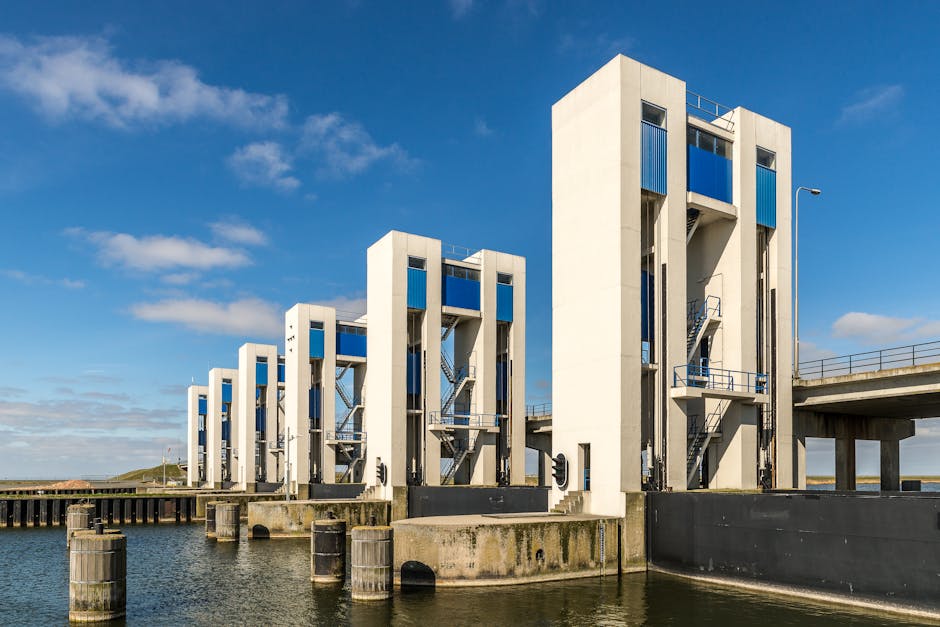
The Afsluitdijk's primary function as a flood defense barrier has become even more critical in the era of climate change. With global sea levels projected to rise, the dam must withstand increasingly powerful storms and higher water levels. To manage water levels in the IJsselmeer, the dam incorporates large discharge sluices at both Den Oever and Kornwerderzand. These sluices allow excess freshwater from the IJsselmeer to be discharged into the Wadden Sea when tidal conditions permit, preventing inland flooding and maintaining a stable water level for agriculture and navigation.
The Afsluitdijk Programme: A Major Renovation
Recognizing the need to future-proof this vital structure, the Dutch government initiated the Afsluitdijk Programme, a comprehensive renovation project. Launched in 2018 and expected to be completed around 2025, this ambitious undertaking aims to reinforce the dam against a "super storm" occurring once every 10,000 years, significantly exceeding current safety standards.
The renovation involves strengthening the dam's structure, increasing its height, and expanding its discharge capacity. New, larger discharge sluices are being constructed, alongside powerful pumping stations that can actively pump water out of the IJsselmeer into the Wadden Sea, even during high tide. This ensures effective water management regardless of external sea levels, a crucial adaptation to climate change. The project is being executed by the Levvel consortium, a partnership of engineering and construction firms.
Innovation in Renewable Energy
The Afsluitdijk has also become a hub for innovative renewable energy projects. Its strategic location and connection to vast bodies of water make it ideal for exploring various sustainable energy solutions.
Blue Energy
One pioneering project is the "Blue Energy" plant, which harnesses the energy released when saltwater and freshwater mix. By exploiting the osmotic pressure difference between the IJsselmeer (freshwater) and the Wadden Sea (saltwater), specialized membranes generate electricity. While still in its developmental stages, this technology holds significant promise for clean energy production.
Tidal and Hydroelectric Power
Though not a traditional tidal barrier, the dam's sluices offer potential for small-scale hydroelectric power generation from the flow of water between the IJsselmeer and the Wadden Sea. Additionally, the surrounding areas are increasingly being utilized for wind energy, aligning with the Netherlands' broader goals for energy transition.
The Fish Migration River
Recognizing the ecological impact of the dam, particularly on migratory fish species, a groundbreaking project known as the "Fish Migration River" is underway. This innovative structure aims to create a gradual transition zone between the freshwater IJsselmeer and the saltwater Wadden Sea, allowing fish to pass through the dam without encountering extreme salinity changes or physical barriers. This initiative seeks to restore ecological connectivity and biodiversity, mitigating some of the environmental consequences of the dam's construction.
A National Monument and Tourist Attraction
Beyond its functional roles, the Afsluitdijk is a cherished national monument, symbolizing Dutch ingenuity and the country's enduring battle against the sea. It features a monument and a viewing tower designed by Dutch architect Willem Dudok, offering panoramic views of the IJsselmeer and the Wadden Sea. The dam attracts numerous tourists and serves as an educational site, illustrating the history and future of water management.
Impact: A Legacy of Transformation
The construction and ongoing evolution of the Afsluitdijk have had a profound and multifaceted impact on the Netherlands, shaping its geography, economy, environment, and national identity.
Environmental Transformation
The most immediate environmental impact was the transformation of the saltwater Zuiderzee into the freshwater IJsselmeer. This created new habitats for freshwater species, including various fish and bird populations, but also led to the decline of saltwater ecosystems. The new polders, reclaimed from the former Zuiderzee, provided fertile agricultural land, altering the landscape dramatically. The ongoing Fish Migration River project represents a modern effort to balance human engineering with ecological restoration, acknowledging the need to support biodiversity.
Economic Prosperity and Security
Economically, the Afsluitdijk has been a cornerstone of Dutch prosperity. It protects vast areas of agricultural land, industrial zones, and densely populated cities from the devastating economic costs of flooding. The polders created as part of the Zuiderzee Works, such as Wieringermeer, Noordoostpolder, and Flevoland, have become highly productive agricultural regions, contributing significantly to the Dutch economy. The dam also secures a vital freshwater supply for agriculture and drinking water, essential for both rural and urban development. Furthermore, the dam's highway facilitates trade and tourism, connecting regions and boosting local economies.
Social and Cultural Significance
The Afsluitdijk holds immense social and cultural significance for the Dutch people. It is a powerful symbol of national pride, resilience, and the nation's unique ability to "create" land and master water. The adage "God created the world, but the Dutch created Holland" finds its most tangible expression in projects like the Afsluitdijk. It represents a collective achievement that unites the nation and inspires future generations to tackle grand challenges with innovation and determination. The communities that grew on the newly reclaimed polders developed unique identities, reflecting their pioneering spirit.
What Next: Future Outlook and Bilateral Ties
As the Afsluitdijk Programme nears completion, the dam is poised to continue its role as a global exemplar of water management and climate adaptation. Prime Minister Modi's visit highlights the growing importance of international collaboration in addressing shared challenges, particularly between nations with significant coastlines and water-related issues.
Completion of the Renovation
The finalization of the Afsluitdijk Programme, expected in the coming years, will mark a new chapter for the dam. The enhanced flood defenses will provide protection against extreme weather events for at least the next century, securing the safety and economic stability of a significant portion of the Netherlands. The increased discharge capacity and innovative pumping stations will ensure optimal water management, even in the face of rising sea levels and altered precipitation patterns.
Continued Innovation in Climate Adaptation
The Netherlands remains at the forefront of climate adaptation research and development. The Afsluitdijk will likely continue to serve as a living laboratory for new technologies, including further advancements in Blue Energy, sustainable infrastructure materials, and integrated water systems. The lessons learned from its ongoing renovation and innovative projects will undoubtedly contribute to global efforts in climate resilience.
PM Modi’s Visit and India-Netherlands Partnership
Prime Minister Modi's decision to visit the Afsluitdijk carries significant weight. India, with its extensive coastline, vast river systems, and vulnerability to monsoons and sea-level rise, faces its own complex water management challenges. The Netherlands, with its centuries of expertise in delta management and hydraulic engineering, offers invaluable knowledge and potential partnership opportunities.
Modi's visit can be seen as a strategic step to explore potential collaborations in areas such as flood control, coastal protection, sustainable water resource management, and renewable energy. India's ambitious infrastructure development plans and its focus on climate action align well with Dutch expertise. Knowledge exchange on topics like delta management, urban water resilience, and the integration of nature-based solutions could prove highly beneficial for both nations.
The visit underscores the strengthening diplomatic and economic ties between India and the Netherlands. By showcasing a marvel like the Afsluitdijk, the Netherlands reinforces its position as a global leader in water technology and innovation, potentially paving the way for joint ventures and shared solutions to some of the world's most pressing environmental and developmental challenges. The Afsluitdijk, therefore, stands not only as a monument to Dutch ingenuity but also as a symbol of international cooperation in a world increasingly grappling with the impacts of climate change.
