
Dwarf Galaxies Reveal Black Hole Secrets: New Study Challenges Theories
A groundbreaking international study has dramatically reshaped our understanding of supermassive black holes within dwarf galaxies, systems previously thought to host only dormant or non-existent central behemoths. Conducted by a collaborative team of astrophysicists, the research offers unprecedented insights into galactic evolution and the mysterious origins of black holes, challenging long-held assumptions about how these cosmic giants form and grow in the universe's smaller systems. The findings, recently published, mark a significant advancement in astrophysics, opening new avenues for exploration into the early universe.
Background: The Unseen Giants in Miniature Galaxies
Dwarf galaxies are the most numerous type of galaxy in the universe, characterized by their relatively small size, containing anywhere from a few million to several billion stars, compared to the hundreds of billions in larger spiral galaxies like our Milky Way. These systems are often considered the building blocks of the cosmos, providing crucial clues about the early universe and the processes that led to the formation of larger galactic structures. Historically, their low stellar mass and less violent merger histories led astronomers to believe they were unlikely to harbor massive central black holes, or at least not active ones.
Supermassive black holes (SMBHs) are gravitational titans, millions to billions of times the mass of our Sun, found at the centers of most large galaxies. Their presence is often correlated with the properties of their host galaxy's bulge, a relationship known as the M-sigma relation. This correlation suggested that black holes and their host galaxies co-evolved, with the black hole's growth intricately linked to the galaxy's development. However, applying this relation to dwarf galaxies, which often lack prominent bulges, presented a significant challenge and led to predictions of either very small or absent central black holes.
For decades, the search for active black holes in dwarf galaxies yielded only a handful of candidates, often found in systems that had recently undergone interactions or mergers, complicating the interpretation of their origins. These isolated discoveries were considered anomalies rather than a widespread phenomenon. Observations from telescopes like NASA's Chandra X-ray Observatory and the Hubble Space Telescope occasionally hinted at faint X-ray or radio emissions from dwarf galaxy centers, but definitive proof of active supermassive black holes remained elusive and hotly debated within the scientific community.
The prevailing theoretical models for the formation of the first supermassive black holes, known as "seed black holes," include two main scenarios: the collapse of the first massive stars (forming stellar-mass black holes that then grow) or the direct collapse of massive gas clouds in the early universe. Dwarf galaxies, being pristine and less evolved, were considered prime targets for finding these primordial seed black holes, offering a unique laboratory to test these competing theories without the confounding effects of numerous mergers and complex evolutionary histories seen in larger galaxies.
Understanding the black hole population in dwarf galaxies is critical for piecing together the cosmic puzzle. If these small galaxies, which dominate the universe's population, routinely host active black holes, it drastically alters our understanding of galactic evolution, the distribution of dark matter, and the mechanisms by which black holes accrete matter and influence their environments across cosmic time. The lack of robust evidence for active SMBHs in dwarfs had been a persistent gap in our cosmological narrative, making any new findings profoundly significant.
Key Developments: Unveiling Hidden Activity
The recent study, spearheaded by the "Dwarf Galaxy Black Hole Census" collaboration, represents a significant leap forward. Utilizing a multi-wavelength observational approach, the team meticulously analyzed data from several cutting-edge observatories. Key among these were the Chandra X-ray Observatory, which excels at detecting the high-energy X-rays emitted by gas heated to millions of degrees as it spirals into a black hole; the Karl G. Jansky Very Large Array (VLA) for identifying radio jets and outflows; and the Gemini North Telescope, providing crucial optical spectroscopic data to measure gas velocities and identify broad emission lines indicative of an active galactic nucleus (AGN).
The researchers focused on a sample of over 100 dwarf galaxies located within 200 million light-years of Earth, selected for their relatively undisturbed nature. Their methodology involved not just searching for bright, obvious AGN signatures, but also employing advanced signal processing techniques to detect fainter, more obscured black hole activity. This sensitive approach allowed them to uncover black holes that had previously gone unnoticed, hidden by dust and gas or simply too dim for older surveys.
Prevalence and Rapid Growth
One of the most striking findings was the surprisingly high prevalence of active supermassive black holes in these dwarf systems. The study identified active black holes in approximately 15-20% of the surveyed dwarf galaxies, a figure significantly higher than previous estimates. These black holes, though smaller in absolute mass compared to their counterparts in giant galaxies, were found to be growing at a rapid pace relative to their host galaxy’s stellar mass, indicating a period of intense accretion.
Wandering Black Holes and Formation Insights
Another intriguing discovery was the detection of several “wandering” black holes, located significantly off-center from the kinematic center of their host dwarf galaxies. This phenomenon suggests that these black holes might be remnants of past minor mergers, or perhaps they were ejected from their original central positions by gravitational recoil during a powerful event. Such off-center black holes provide critical clues about the dynamics of galactic nuclei and the potential for black holes to migrate within their hosts, offering a new perspective on how galaxies are assembled.
The rapid growth rates observed in these dwarf galaxy black holes also have profound implications for the "seed black hole" problem. The study's data suggests that many of these black holes could be growing from initial masses consistent with the direct collapse scenario, where massive primordial gas clouds collapsed directly into black holes of thousands to hundreds of thousands of solar masses. This contrasts with the stellar remnant scenario, which typically predicts smaller initial seed black holes. The intense accretion rates observed could explain how these seeds rapidly grow to supermassive proportions even in the early universe, where dwarf galaxies were the predominant galactic form.
Feedback Mechanisms and Star Formation
Furthermore, the research provided initial evidence for how these active black holes influence star formation in their host dwarf galaxies. While supermassive black holes in large galaxies are known to regulate star formation through powerful outflows (AGN feedback), the effect in smaller systems was less understood. The study found indications that even the relatively smaller outflows from dwarf galaxy black holes could significantly impact their hosts, potentially clearing gas and suppressing star formation in some regions, or, conversely, triggering it in others by compressing gas clouds. This suggests a more universal role for black hole feedback across the galactic mass spectrum than previously appreciated.
Impact: Reshaping Cosmic Understanding
The implications of this study reverberate across multiple subfields of astrophysics and cosmology. For astrophysicists studying galaxy evolution, the findings necessitate a significant revision of existing models. If dwarf galaxies commonly host active supermassive black holes, then the mechanisms driving galactic growth and star formation must account for this pervasive influence. The co-evolution of black holes and galaxies appears to be a more fundamental and widespread process than previously assumed, extending even to the smallest and most primitive galactic systems. This challenges the notion that black hole growth is solely tied to major merger events in large galaxies.
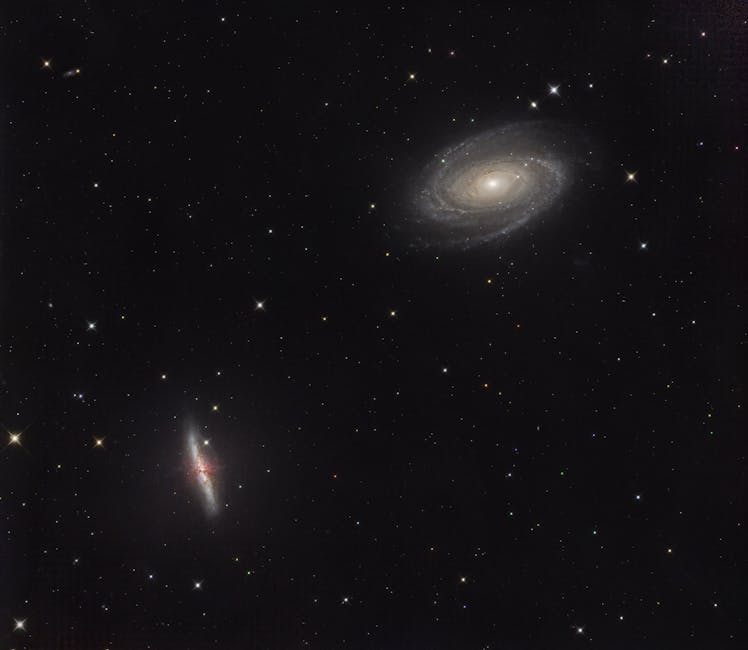
Cosmologists will also find the results transformative. Dwarf galaxies are thought to be analogous to the first galaxies that formed in the early universe. Discovering numerous active black holes in these local analogues provides a crucial window into the conditions and processes that existed billions of years ago. It strengthens the argument for the existence of massive "seed" black holes very early in cosmic history, potentially influencing the reionization of the universe and the formation of the first large structures. The study offers empirical data to constrain theoretical models of seed black hole formation, helping to distinguish between competing scenarios like direct collapse versus stellar remnant seeds.
The scientific community as a whole benefits from this expanded understanding. The "Dwarf Galaxy Black Hole Census" project has opened up a rich new frontier for observational and theoretical research. It motivates further detailed studies of individual dwarf galaxies and their central engines, pushing the boundaries of what current and future telescopes can achieve. This deeper insight into the universe's most abundant galactic population provides a more complete and nuanced picture of how the cosmos evolved from its nascent stages to its present complexity.
For public understanding of the universe, these discoveries add another layer of wonder and complexity. The idea that even the smallest, most unassuming galaxies can harbor powerful, actively growing black holes paints a more dynamic and interconnected cosmic landscape. It highlights the pervasive nature of black holes and their profound influence on galactic ecosystems, challenging simplistic views of a universe where black holes are confined only to the grandest galaxies.
Furthermore, the findings will directly impact the design and priorities of future space missions and ground-based observatories. Instruments capable of detecting faint X-ray, radio, and infrared signatures from distant, obscured black holes in low-mass galaxies will become even more critical. The study provides a roadmap for where to look and what to look for, guiding the next generation of astronomical tools to unravel the remaining mysteries of black hole formation and galactic co-evolution across cosmic time. It suggests that many "missing" black holes might simply be lurking in plain sight within the vast population of dwarf galaxies.
What Next: Charting the Future of Black Hole Research
The success of the "Dwarf Galaxy Black Hole Census" project is just the beginning. The scientific community is already planning the next steps to build upon these foundational discoveries and delve deeper into the mysteries of black holes in dwarf galaxies. A primary focus will be on securing further observations with next-generation astronomical facilities, which promise unprecedented sensitivity and resolution.
Next-Generation Observatories
The James Webb Space Telescope (JWST) is expected to play a pivotal role. Its unparalleled infrared capabilities will allow astronomers to peer through the dust and gas that often obscure active black holes, particularly in the most distant and early dwarf galaxies. JWST can detect the warm dust emission from accretion disks and the spectral signatures of broad emission lines in the infrared, providing crucial data on black hole growth rates and their host environments in a regime inaccessible to previous telescopes. Similarly, the upcoming Nancy Grace Roman Space Telescope will offer wide-field infrared surveys, potentially identifying hundreds more candidate dwarf galaxy AGN.
On the radio front, the Square Kilometre Array (SKA), currently under construction, will revolutionize the detection of faint radio jets and outflows from black holes in dwarf galaxies. Its immense collecting area and sensitivity will enable astronomers to map the distribution and kinematics of gas in these systems with exquisite detail, directly observing how black hole feedback impacts star formation and gas expulsion. Future X-ray missions, such as the proposed Lynx X-ray Observatory, would offer even greater sensitivity and angular resolution than Chandra, allowing for the detection of even fainter and more distant active black holes, pushing the observational frontier to the earliest epochs of the universe.
Refined Simulations and Theoretical Models
Parallel to observational efforts, significant work is anticipated in theoretical astrophysics and cosmological simulations. Current numerical models of galaxy formation will need to be refined to incorporate the newfound prevalence and activity of black holes in dwarf systems. These simulations will aim to accurately reproduce the observed black hole population, their growth rates, and their feedback mechanisms within the context of dwarf galaxy evolution. Developing more sophisticated models for seed black hole formation, particularly those exploring the direct collapse scenario, will be crucial, informed by the empirical data from this study.
Researchers will also explore the interplay between dark matter halos and black hole growth in dwarf galaxies. Given that dwarf galaxies are heavily dominated by dark matter, understanding how this invisible component influences the supply of gas to the central black hole and its subsequent activity is a key area for future theoretical investigation. The "wandering" black holes discovered also prompt new simulations of black hole dynamics within galactic nuclei, especially after minor merger events.
Large-Scale Surveys and Population Studies
Future research will also involve conducting even larger, more systematic surveys of dwarf galaxies across a wider range of environments and redshifts. The goal is to build a comprehensive census of black holes in these systems, enabling astronomers to statistically characterize their properties, such as mass function, accretion rates, and duty cycles. Such surveys will help to determine how the black hole population in dwarfs evolves over cosmic time and how it connects to the evolution of supermassive black holes in larger galaxies.
Ultimately, these ongoing and future efforts aim to fully integrate dwarf galaxy black holes into the grand narrative of cosmic evolution. By understanding the smallest active black holes in the universe's smallest galaxies, scientists hope to unlock fundamental truths about the origins of structure, the growth of galaxies, and the pervasive influence of black holes from the dawn of time to the present day. The "Small galaxies, big questions" paradigm continues to drive some of the most exciting research in modern astrophysics, promising even more profound discoveries in the years to come.
