
A recent celestial event over Texas culminated in a startling claim from a Houston woman who reported a space rock crashing through her roof. This incident, occurring on a recent evening, has ignited widespread curiosity and prompted a scientific inquiry into the authenticity of the alleged meteorite, drawing attention from local authorities and the broader scientific community, including NASA.
Background: A Fiery Descent Over Texas
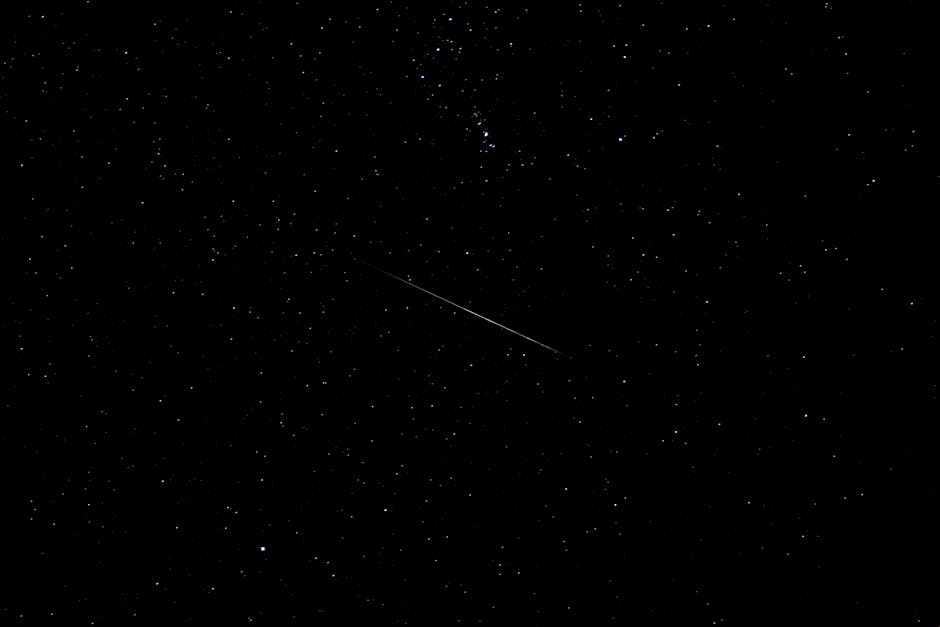
The evening of February 15, 2024, brought an unusual spectacle to the skies over South Texas. Numerous reports flooded social media and local news outlets describing a brilliant flash of light, followed by a resounding boom that rattled homes and startled residents across a wide swath of the region, from Austin to Houston and beyond. Witnesses described a fiery object streaking across the night sky, characteristic of a meteor entering Earth's atmosphere.
The Science of Atmospheric Entry
Meteors are fragments of space rock, known as meteoroids, that enter Earth's atmosphere. As a meteoroid plunges through the atmosphere at immense speeds, typically tens of thousands of miles per hour, it compresses the air in front of it. This compression generates extreme heat, causing the meteoroid to incandesce and create the luminous streak we observe as a meteor, often referred to as a "shooting star." Most meteors are small, burning up completely before reaching the ground. Larger ones, however, can survive the fiery descent, with their remnants striking the Earth's surface as meteorites.
The bright flash observed over Texas was indicative of a relatively large meteoroid. The subsequent sonic boom, reported by many, is a classic signature of an object traveling faster than the speed of sound. As the meteoroid fragments and decelerates, it creates a powerful shockwave that propagates through the atmosphere, manifesting as a loud, concussive sound. This phenomenon is similar to the sonic boom produced by supersonic aircraft.
Historical Context of Meteorite Falls
While spectacular meteor sightings are relatively common, meteorites actually striking populated areas are rare events. Globally, thousands of meteoroids enter Earth's atmosphere each year, but only a fraction are large enough to survive atmospheric ablation and reach the ground. Even fewer are recovered, and fewer still cause property damage or injure people.
One of the most well-documented incidents occurred in Chelyabinsk, Russia, in 2013, when a superbolide exploded over the city, injuring over 1,600 people and damaging thousands of buildings due to the shockwave. While no one was directly hit by a meteorite, fragments were later recovered. Another famous case is the Peekskill meteorite in 1992, which struck a parked car in Peekskill, New York, leaving a significant dent and becoming a valuable scientific specimen. These incidents highlight both the destructive potential and the scientific value of such celestial visitors. The Texas event, if confirmed, would join a select list of documented meteorite impacts on human structures.
Key Developments: A Hole in the Roof
In the wake of the widespread meteor sighting, a Houston resident, Mrs. Mary Ann Elizabeth, came forward with a remarkable claim: a space rock had crashed through her home. The incident reportedly occurred shortly after the meteor event was observed, adding a tangible and dramatic dimension to the celestial spectacle.
The Homeowner’s Account
Mrs. Elizabeth recounted the terrifying moments when her home was suddenly breached. According to her statement, she was in her residence when she heard a loud crash, distinct from the distant sonic boom reported by others. Upon investigation, she discovered a gaping hole in her roof, with debris scattered across her living room floor. Among the insulation, wood fragments, and other household materials, she found a dark, oddly shaped rock.
The rock, described as roughly the size of a fist, was reportedly still warm to the touch when she discovered it. Its appearance was distinct from typical terrestrial rocks, exhibiting a charred, fusion-crusted exterior — a hallmark of objects that have endured extreme heat during atmospheric entry. The impact had not only damaged her roof but also created a significant hole in her ceiling and left a noticeable mark on her flooring.
Initial Response and Verification Efforts
Immediately after the discovery, Mrs. Elizabeth contacted local authorities. Police and fire department officials responded to her home, documenting the damage and the presence of the unusual rock. While first responders are not equipped to definitively identify extraterrestrial objects, they confirmed the structural damage to the roof and ceiling, lending credence to the homeowner's account of an impact from above.
The challenge now lies in scientifically verifying the object's extraterrestrial origin. Many terrestrial rocks can appear unusual, and mistaken identities are common. Therefore, a rigorous scientific examination is crucial. Initial steps typically involve visual inspection by experts, testing for magnetic properties (many meteorites contain iron and are magnetic), and density measurements.
NASA’s General Stance and Expert Involvement
While NASA does not typically dispatch teams to every reported meteorite fall, the agency plays a crucial role in the broader understanding of space objects and their interaction with Earth. NASA's Near-Earth Object (NEO) Observations Program tracks asteroids and comets that could pose a threat to Earth, providing valuable data on potential atmospheric entries.
Regarding individual meteorite claims, NASA generally advises that suspected meteorites be examined by qualified experts. Institutions such as university geology departments, natural history museums, or specialized meteorite laboratories are equipped with the tools and expertise to conduct detailed analyses. These analyses can include:
Petrographic analysis: Examining thin sections of the rock under a microscope to study its mineral composition and texture, which often differ significantly from terrestrial rocks.
* Chemical analysis: Determining the elemental composition, looking for specific ratios of isotopes or rare elements characteristic of extraterrestrial material.
* X-ray diffraction: Identifying the crystalline structures of minerals present.
* Electron microscopy: Providing high-resolution images of surface features and internal structures.
In the case of the Houston claim, local geological experts and meteorite specialists have likely been contacted to assess the object. The American Meteor Society (AMS), a non-profit scientific organization that tracks meteor sightings, also plays a role in collecting data and sometimes assisting in meteorite recovery efforts. Their extensive network of observers and scientists can help triangulate the trajectory of a meteor and narrow down potential fall areas. The Meteoritical Society, a global organization, maintains a database of all confirmed meteorites and sets the standards for their classification.
The key message from scientific bodies, including implicit statements from NASA's educational outreach, is the importance of careful, unbiased scientific analysis. Every confirmed meteorite provides invaluable insights into the formation of our solar system, making each find a potential treasure trove of scientific data.
Impact: From Personal Trauma to Scientific Opportunity
The alleged meteorite strike in Houston has created a multifaceted impact, affecting the homeowner directly, intriguing the local community, and presenting a significant opportunity for the scientific community.
Impact on the Homeowner
For Mrs. Elizabeth, the incident was undoubtedly a traumatic and bewildering experience. The sudden intrusion of an object from space, tearing through her roof and disrupting the sanctity of her home, carries a profound psychological weight. Beyond the immediate shock, she now faces the practical challenges of property damage. Repairing a roof and ceiling, especially one damaged by such an unusual event, can be costly and disruptive.
Insurance claims for damage caused by meteorites are rare but not unprecedented. Standard homeowner's insurance policies often cover "acts of God" or "falling objects." However, the specific wording of policies and the need for scientific confirmation of the object's extraterrestrial origin can complicate the process. The unique nature of the event might require extensive documentation and expert reports to satisfy insurance adjusters. Furthermore, the potential value of a confirmed meteorite could also introduce complexities regarding ownership and potential compensation.
Community and Public Reaction
The story has naturally captivated the local Houston community and garnered national attention. Such events spark a unique blend of fear, wonder, and scientific curiosity. Residents who witnessed the meteor's fiery descent are now connecting their observations to a tangible impact, reinforcing the reality of space objects interacting with our planet. The incident serves as a stark reminder that while space is vast, its contents can occasionally make an unexpected visit to our doorsteps.
Public interest also translates into increased awareness about space science, meteorites, and planetary defense. It encourages people to look up at the night sky with renewed appreciation and understanding of the dynamic processes occurring above us. This heightened interest can be a valuable tool for science education and engagement.
Scientific Significance
If confirmed as a meteorite, the object found in Houston would be of immense scientific value. Each meteorite carries a unique record of the early solar system, preserving clues about the conditions under which planets formed, the composition of primordial matter, and the processes that shaped celestial bodies billions of years ago.
Rare Type: Some meteorites are rarer than others. A carbonaceous chondrite, for example, could contain organic compounds and water-bearing minerals, offering insights into the origin of life on Earth.
* Fresh Fall: "Fresh falls," meteorites discovered shortly after their descent, are particularly valuable because they have undergone minimal terrestrial weathering. This preserves their original composition and structure, making them ideal for detailed analysis.
* Trajectory Data: With numerous eyewitness accounts of the meteor, scientists might be able to calculate its atmospheric trajectory and even its likely orbit in space before it encountered Earth. This data helps in understanding the source regions of meteoroids in the solar system.
The study of such meteorites contributes to our understanding of the universe, providing direct samples of extraterrestrial material that would otherwise be inaccessible without costly space missions.
Legal and Ownership Aspects
The legal ownership of meteorites can be complex. In the United States, the general rule is that a meteorite found on private land belongs to the landowner. If found on public land, it may belong to the finder or the government, depending on specific state and federal laws. In Mrs. Elizabeth's case, as the object reportedly landed on her property, she would likely be considered the legal owner. However, if the object is confirmed to be a rare or scientifically significant meteorite, there might be discussions about its curation, potential sale, or donation to a scientific institution. This often involves negotiations between the landowner and interested scientific bodies, sometimes leading to agreements where the meteorite is loaned or sold for research and public display.
What Next: The Path to Confirmation and Beyond
The immediate future for the alleged Houston meteorite centers on the rigorous process of scientific verification. This critical phase will determine the true nature of the object and unlock its potential scientific secrets.
The Scientific Verification Process
The suspected meteorite is currently undergoing examination by experts. This process is meticulous and can take weeks or even months, depending on the complexity of the analyses required. Typically, a small sample of the rock will be taken for various tests.
Density and Magnetism: Initial tests will measure its density, which for stony meteorites is often higher than common terrestrial rocks, and check for magnetism, indicative of iron-nickel content.
* Fusion Crust and Regmaglypts: Experts will look for a distinct "fusion crust" — a thin, glassy, often black layer formed by the melting of the outer surface during atmospheric entry. They will also search for "regmaglypts," thumbprint-like indentations on the surface caused by ablation.
* Internal Structure: If the outer characteristics are promising, the rock may be cut to examine its interior. Many meteorites, particularly chondrites, contain small, spherical structures called chondrules, which are unique to meteorites and not found in terrestrial rocks. The presence of metallic flecks (iron-nickel) within a stony matrix is another strong indicator.
* Advanced Laboratory Analysis: If initial tests are positive, more sophisticated analyses will follow. These include electron microprobe analysis to determine the precise elemental composition of individual minerals, X-ray diffraction to identify crystal structures, and isotopic analysis to measure the ratios of different isotopes, which can reveal the meteorite's age and origin in the solar system.
These analyses are usually conducted at specialized laboratories in universities or museums, often involving collaborations between multiple institutions.
Expected Timeframe and Potential Outcomes
The timeframe for confirmation can vary. Simple visual and magnetic tests can provide preliminary indications quickly, but definitive confirmation from detailed laboratory analysis can take longer. Scientists prioritize accuracy and thoroughness to ensure any new meteorite classification is sound.
If the object is confirmed to be a meteorite, several outcomes are possible:
Official Classification: It would be officially classified by the Meteoritical Society and added to the global meteorite database. It would likely be named after a geographical location near its fall site, such as "Houston" or a more specific local name.
* Scientific Study and Publication: The meteorite would become a subject of intense scientific study, with findings published in peer-reviewed journals. It could contribute to ongoing research in cosmochemistry, planetary science, and astrobiology.
* Public Display: A portion of the meteorite might be put on public display in a museum, allowing the public to view a tangible piece of outer space.
* Homeowner's Decision: Mrs. Elizabeth would then face decisions regarding the meteorite's future. She could choose to keep it, sell it to a collector or institution, or donate it for research and educational purposes. The market value of meteorites varies widely depending on their type, rarity, and condition.
NASA’s Broader Role and Future Monitoring
While NASA's direct involvement in this specific verification is limited, the agency's broader work is highly relevant. NASA's Planetary Defense Coordination Office (PDCO) is responsible for detecting and tracking Near-Earth Objects (NEOs) that could pose an impact threat to Earth. While the Houston event was caused by a relatively small object that posed no global threat, the PDCO's work ensures that larger, potentially hazardous objects are identified well in advance.
NASA also continuously monitors Earth's atmosphere for meteoroid entries, using a network of sensors and collaborating with organizations like the AMS. This data helps scientists understand the frequency and energy of atmospheric impacts, contributing to our overall knowledge of the space environment near Earth.
The incident serves as a powerful reminder of the dynamic nature of our solar system and the continuous interaction between Earth and the cosmos. As scientists await the definitive results, the Houston roof incident stands as a compelling narrative, bridging the vastness of space with the everyday reality of life on Earth. It underscores the importance of scientific inquiry, public awareness, and the remarkable stories that can unfold when the universe delivers a package to our doorstep.
