
A recent scientific development highlights the advanced laboratory application of a Closed-Path "Industrial Emissions" Fourier Transform Infrared (FTIR) Spectrometer. This innovative approach is significantly improving the high-concentration sampling of biomass burning smoke, enabling more accurate retrieval of critical fire emission factors. The research, emerging from a dedicated atmospheric chemistry laboratory, marks a pivotal step in understanding the environmental impact of wildfires and other combustion events.
Background: Unraveling the Complexity of Biomass Smoke
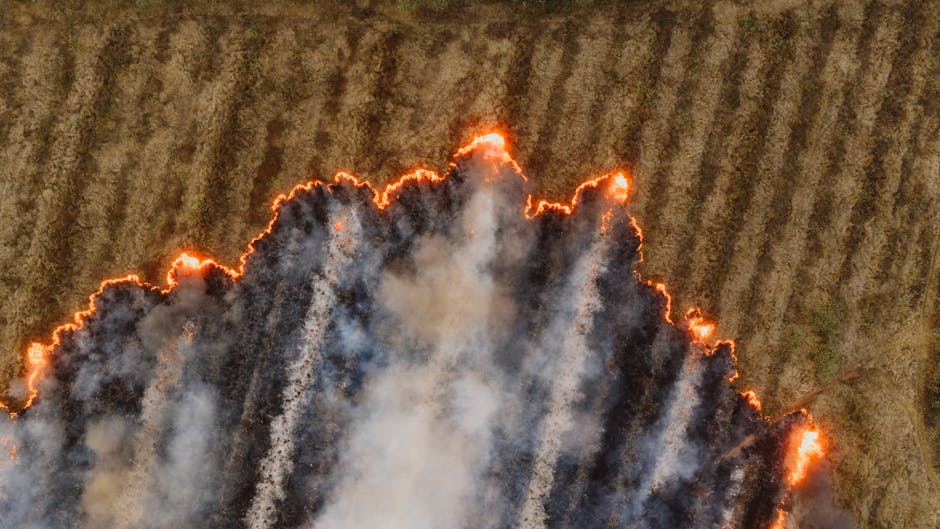
Biomass burning, encompassing wildfires, prescribed burns, and agricultural clearings, constitutes a major global source of atmospheric pollutants and greenhouse gases. These emissions profoundly influence air quality, regional climate patterns, and global radiative forcing. Accurately quantifying the chemical composition and emission rates of these complex smoke plumes is crucial for developing robust climate models, predicting air quality impacts, and informing public health advisories.
For decades, scientists have grappled with the challenges of measuring biomass burning emissions. Smoke plumes are characterized by extremely high concentrations of various gases and particulate matter, often featuring a dynamic mixture of reactive species. Traditional measurement techniques have faced limitations, particularly when dealing with the undiluted, hot, and often corrosive nature of fresh smoke. Early methods often involved extensive dilution of smoke samples to bring concentrations within the measurable range of conventional instruments. While practical, this dilution can alter the chemical composition, potentially leading to the loss of reactive species or changes in particle size distributions, thereby introducing artifacts into the data.
The evolution of Fourier Transform Infrared (FTIR) spectroscopy offered a significant leap forward. FTIR instruments work by measuring the absorption of infrared light by gas molecules, allowing for the simultaneous identification and quantification of multiple gas species. Open-path FTIR systems have been widely used in field campaigns, providing integrated measurements over long distances. However, in controlled laboratory settings, where precise, high-concentration measurements are required from specific combustion events, the limitations of open-path systems became apparent, particularly concerning sample integrity and the ability to handle extremely dense plumes. The development of industrial emissions FTIR spectrometers, designed for continuous monitoring of stack gases, presented a robust solution for high-concentration, challenging environments, but their application to biomass smoke in a laboratory setting required adaptation.
The concept of emission factors (EFs) is central to this research. An emission factor is the mass of a specific compound emitted per unit mass of fuel burned (e.g., grams of carbon monoxide per kilogram of dry biomass). These factors are fundamental inputs for regional and global atmospheric chemistry and climate models. Inaccurate emission factors can lead to significant biases in model predictions, affecting our understanding of the climate system and the effectiveness of mitigation strategies. Therefore, the drive for more precise and reliable emission factor data has been a long-standing goal in atmospheric science.
Key Developments: Adapting Industrial Technology for Research
The core innovation lies in the specialized adaptation and deployment of a Closed-Path "Industrial Emissions" FTIR Spectrometer within a laboratory environment. Researchers have successfully re-engineered its application to directly sample and analyze undiluted, high-concentration smoke generated from controlled biomass burns. This marks a significant departure from previous methodologies that often relied on diluting smoke samples before analysis, a practice known to introduce potential measurement artifacts.
The chosen spectrometer, typically engineered for continuous monitoring of industrial stack emissions, boasts several critical features that make it uniquely suited for biomass smoke analysis. It incorporates a heated sample cell, crucial for preventing the condensation of water vapor and semi-volatile organic compounds (SVOCs) that are abundant in biomass smoke. This heating ensures that the sample remains in a gaseous state throughout the measurement path, preserving its original composition. Furthermore, the robust design of such industrial units allows for direct sampling of hot, chemically aggressive smoke without compromising instrument integrity, a common challenge for more sensitive laboratory-grade instruments.
The closed-path nature of the system is paramount. Unlike open-path systems, where the infrared beam traverses an open atmosphere, a closed-path system draws the sample into a controlled, enclosed cell. This ensures that the entire sample volume within the cell is precisely measured, eliminating interferences from ambient air and allowing for highly accurate quantification of target species. The specific instrument configuration used typically features a multi-pass optical cell, effectively increasing the optical path length within a compact volume. This extended path length enhances the instrument's sensitivity, enabling the detection and quantification of both major and trace gas species within the complex smoke matrix.
The methodology involves drawing smoke directly from a controlled combustion chamber, where various biomass fuels (e.g., specific wood types, agricultural residues, peat) are burned under controlled conditions simulating real-world scenarios. The smoke is then transported through a heated line to the FTIR spectrometer's sample cell. The spectrometer rapidly collects full infrared spectra, often at rates of several scans per second, allowing for the capture of dynamic changes in smoke composition throughout a burn event.
A sophisticated suite of retrieval algorithms is then employed to process these spectra. These algorithms identify and quantify a wide array of gas-phase species present in the smoke. This includes major combustion products like carbon dioxide (CO2), carbon monoxide (CO), and methane (CH4), as well as a multitude of other important trace gases. Crucially, the system is capable of simultaneously measuring non-methane hydrocarbons (NMHCs) such as ethylene and propylene, oxygenated volatile organic compounds (OVOCs) like formaldehyde, acetaldehyde, acetic acid, and methanol, and inorganic species like nitrogen oxides (NOx), sulfur dioxide (SO2), and ammonia (NH3). The high spectral resolution of the FTIR allows for the unambiguous identification of these individual species, even in a highly complex mixture where spectral overlaps are common.
The retrieval of fire emission factors is performed using established methods, most commonly the carbon mass balance approach. This method involves measuring the enhancement ratios of individual species relative to CO2 or CO, and then normalizing these ratios by the carbon content of the fuel and the measured carbon emissions. By directly measuring high concentrations without dilution artifacts, the accuracy of these enhancement ratios is significantly improved, leading to more reliable emission factors. Initial validation studies have shown excellent agreement with reference measurements for well-characterized species, demonstrating the method's robustness and precision. This direct, undiluted sampling approach represents a significant step forward in obtaining a more realistic and comprehensive chemical fingerprint of biomass burning emissions.
Impact: Reshaping Environmental Understanding and Policy
The successful laboratory application of the Closed-Path "Industrial Emissions" FTIR Spectrometer for biomass smoke analysis is poised to have a multifaceted impact across scientific, environmental, and public health domains. This technological advancement directly addresses long-standing challenges in accurately characterizing one of the most significant sources of atmospheric pollution.
Scientifically, the primary impact is the generation of highly accurate and comprehensive emission factors (EFs). By minimizing dilution artifacts and enabling direct, high-concentration measurements, the method yields EFs that more faithfully represent the actual emissions from biomass burning. This improved accuracy is critical for refining global and regional atmospheric chemistry and transport models. More precise EFs will lead to better predictions of air quality degradation during fire events, enhance our understanding of atmospheric pollutant lifetimes, and improve estimates of the radiative forcing effects of biomass burning aerosols and gases on climate. Furthermore, the ability to simultaneously measure a broad spectrum of trace gases, including reactive organic compounds, provides unprecedented detail into the complex chemical evolution of smoke plumes immediately after emission, fostering a deeper understanding of atmospheric reaction pathways.
From an environmental perspective, the enhanced data quality will directly inform policy-making related to air quality management and climate change mitigation. Governments and environmental agencies rely on accurate emission inventories to set regulations, assess compliance, and develop strategies for managing emissions from wildfires, prescribed burns, and agricultural burning. With more reliable EFs, these entities can make more informed decisions regarding land management practices, fire suppression strategies, and the allocation of resources for air quality monitoring and intervention. For instance, a better understanding of specific toxic components in smoke can guide the development of more targeted public health advisories during periods of high smoke exposure.
Technologically, this development showcases the versatility and adaptability of robust industrial instrumentation for advanced scientific research. It demonstrates that instruments designed for challenging industrial environments can be successfully repurposed and integrated into high-precision laboratory settings, opening avenues for similar adaptations in other fields requiring high-concentration, multi-species gas analysis. This could lead to cost efficiencies and accelerate research by leveraging existing, proven technologies.
The public health implications are substantial. Biomass burning smoke is a major source of fine particulate matter (PM2.5) and numerous toxic gases, which pose significant health risks, including respiratory and cardiovascular diseases. More accurate emission factors for specific health-damaging pollutants (e.g., certain volatile organic compounds, polycyclic aromatic hydrocarbons precursors) will enable better exposure assessments and more precise epidemiological studies. This improved understanding can lead to more effective public health warnings, targeted interventions for vulnerable populations, and a clearer picture of the long-term health burdens associated with smoke exposure. Communities downwind of major fire events, in particular, stand to benefit from the improved air quality forecasts and health guidance that stem from this more accurate scientific data.
What Next: Expanding the Horizon of Smoke Research
The successful implementation of the Closed-Path "Industrial Emissions" FTIR Spectrometer for high-concentration biomass smoke analysis opens numerous avenues for future research and practical applications. The immediate next steps involve expanding the scope and scale of studies utilizing this robust methodology.
Researchers plan to apply this advanced technique to a wider array of biomass fuel types, encompassing a greater diversity of global ecosystems. This includes studying emissions from different forest types (boreal, temperate, tropical), various agricultural residues (e.g., rice straw, corn stover), and unique fuels like peatlands, which are known for their high carbon content and distinct emission profiles. Varying burn conditions—such as smoldering versus flaming combustion, fuel moisture content, and ventilation rates—will also be systematically investigated to capture the full spectrum of real-world fire behaviors and their corresponding emissions. Understanding these variations is critical, as emission factors can differ significantly depending on the combustion phase.
A key area for future development is the integration of this highly detailed laboratory data into larger atmospheric models. The improved emission factors will serve as vital inputs for regional air quality models and global climate models, enhancing their predictive capabilities. This integration will facilitate more accurate forecasts of smoke plume dispersion, atmospheric chemical transformations, and the subsequent impacts on air quality and climate. Efforts will also focus on developing standardized protocols for laboratory biomass burning experiments using this FTIR method, which could lead to inter-comparison studies across different research institutions and foster greater data consistency.
Furthermore, while the current focus is on fresh smoke, future research may explore the chemical evolution and aging of smoke plumes. By coupling the FTIR system with reaction chambers or aging experiments, scientists could track how the composition of smoke changes over time as it interacts with the atmosphere, forming secondary pollutants. This would provide invaluable insights into the full life cycle of smoke and its broader environmental impacts.
There is also potential for the development of even more sophisticated retrieval algorithms, possibly incorporating machine learning techniques, to extract a greater number of trace species or to improve the quantification of species with complex spectral features. Collaborations with instrument manufacturers could lead to optimized designs tailored specifically for atmospheric research applications, potentially making such robust systems more accessible to a broader scientific community.
Ultimately, the goal is to bridge the gap between controlled laboratory experiments and real-world field observations. The precise, high-resolution data obtained in the lab will serve as a foundational dataset for interpreting and validating measurements from airborne and satellite platforms, contributing to a more comprehensive and cohesive understanding of biomass burning emissions on a global scale. This ongoing work promises to continually refine our knowledge of how fire shapes our atmosphere and climate.
