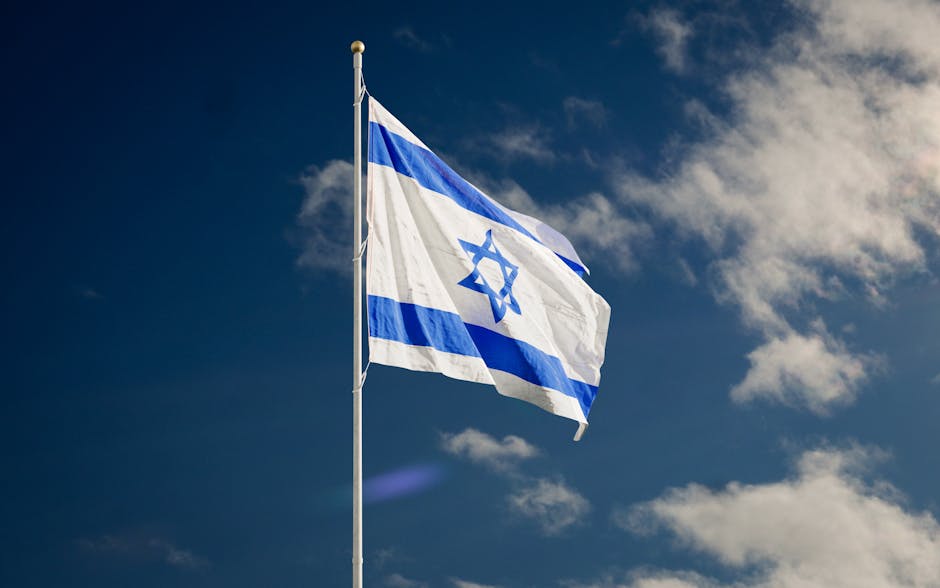
The Israeli military has issued evacuation orders for residents of seven villages in southern Lebanon, signaling a significant escalation in regional tensions. This directive, announced in recent days, impacts communities situated along the volatile border, urging their immediate departure amidst ongoing hostilities. The move comes as cross-border exchanges intensify, raising fears of a broader conflict.
Background: A Region on Edge
The current volatile situation along the Israel-Lebanon border is deeply rooted in decades of geopolitical friction, significantly exacerbated by the broader regional dynamics involving Iran and its proxies. While direct military confrontation between Israel and Iran has historically been limited, the two nations have engaged in a protracted shadow war, often played out through proxy groups and regional allies.
A pivotal moment in the recent escalation was the October 7, 2023, attack by Hamas on southern Israel. This unprecedented assault triggered a large-scale Israeli military operation in Gaza, drawing immediate and strong reactions across the Middle East. Among the most significant responses was the increased activity by Hezbollah, a powerful Lebanese Shiite political party and militant group, which Israel considers Iran's most formidable proxy in the region.
Hezbollah's origins trace back to the early 1980s, emerging during the Lebanese Civil War with significant support from Iran. Over the years, it has evolved into a formidable military and political force, possessing a substantial arsenal of rockets, missiles, and drones. The group’s stated primary objective is resistance against Israel, and it has engaged in numerous confrontations, most notably the 2006 Lebanon War. That conflict resulted in widespread destruction in Lebanon and significant casualties on both sides, ending with a UN-brokered ceasefire and the deployment of the United Nations Interim Force in Lebanon (UNIFIL) to monitor the border.
Following October 7, Hezbollah began launching rockets, anti-tank missiles, and drones toward northern Israel, stating these actions were in solidarity with Palestinians in Gaza and a response to Israeli actions. These initial attacks were often calibrated to avoid a full-scale war but aimed to keep Israeli forces engaged on multiple fronts. Israel responded with artillery fire, airstrikes, and drone attacks targeting Hezbollah infrastructure, operatives, and launch sites in southern Lebanon.
Before the recent evacuation orders for Lebanese villages, Israel had already taken significant steps to secure its northern border. Tens of thousands of Israeli residents from communities bordering Lebanon were evacuated shortly after October 7, relocating to safer areas further south. This internal displacement highlighted the severe security concerns in Israel's northern region and underscored the potential for widespread civilian impact from the ongoing exchanges.
The international community, including the United Nations and various diplomatic missions, has repeatedly called for de-escalation, expressing deep concern over the potential for a wider regional conflict. UNIFIL, tasked with maintaining peace and security along the Blue Line, has found its mission increasingly challenging amidst the daily exchanges of fire, with several of its positions and personnel inadvertently caught in the crossfire.
Lebanon itself is in a precarious state, grappling with a severe economic crisis, political paralysis, and a large population of Syrian refugees. The prospect of a full-blown war with Israel poses an existential threat to the country, potentially leading to further economic collapse, massive displacement, and profound human suffering. The fragile state of the Lebanese government means it has limited capacity to manage or contain the conflict, leaving much of the decision-making in the hands of non-state actors like Hezbollah.
Key Developments: Evacuation Orders and Intensified Hostilities
The issuance of evacuation orders by the Israeli military for seven villages in southern Lebanon represents a critical shift in the dynamics of the conflict. This directive, unprecedented in its scope for Lebanese civilians in the current phase of hostilities, signals a heightened state of alert and potentially a prelude to more extensive military operations. The specific communities targeted by these orders are located directly adjacent to the Blue Line, the de facto border between Israel and Lebanon, placing their residents in immediate danger from ongoing exchanges.
The Israeli Defense Forces (IDF) communicated these orders through various means, including direct phone calls to residents, distribution of leaflets in Arabic, and announcements via local media channels. The messages explicitly warned residents of the escalating security situation and advised them to leave their homes for their safety, indicating that their areas could become active combat zones. While the IDF stated the measure was purely for the protection of civilian lives, it was widely interpreted as a clear signal of Israel's intent to operate more aggressively in these areas without concern for civilian casualties.
This development follows a period of sustained and intensifying cross-border fire. In recent weeks, Hezbollah has increased the frequency and sophistication of its attacks, employing a wider array of weaponry including advanced anti-tank guided missiles, rockets, and explosive drones. These attacks have targeted Israeli military positions, border communities, and civilian infrastructure, resulting in casualties among Israeli soldiers and civilians, as well as significant material damage. The consistent targeting has severely disrupted daily life in northern Israel, forcing businesses to close and agricultural activities to cease.
Israel's response has also become more robust. The IDF has conducted deeper and more frequent airstrikes and artillery bombardments into Lebanese territory, targeting not only identified Hezbollah launch sites and weapon depots but also command centers and operational infrastructure. Precision strikes have reportedly eliminated several Hezbollah commanders and operatives, a strategy aimed at degrading the group's capabilities and leadership structure. The Israeli military has also deployed additional forces, including armored units and infantry, to its northern border, reinforcing defensive positions and preparing for potential ground incursions.
Hezbollah, in turn, has condemned the Israeli evacuation orders as an act of aggression and psychological warfare, vowing to continue its resistance. The group has publicly stated that its actions are a legitimate response to Israeli aggression in Gaza and against Lebanese sovereignty. Its leadership has warned Israel against any significant escalation, threatening a powerful and widespread retaliation that could engulf the entire region. This rhetoric underscores the deep-seated animosity and the high stakes involved for both parties.
Internationally, the new evacuation orders have prompted renewed calls for immediate de-escalation. The United Nations and several Western nations have expressed grave concern over the humanitarian implications of displacing thousands of Lebanese civilians and the potential for a full-scale regional conflict. Diplomatic efforts, often led by the United States and France, have intensified, aiming to broker a ceasefire or at least a reduction in hostilities. These efforts typically involve shuttle diplomacy between Beirut and Jerusalem, attempting to establish clear channels of communication and de-escalation mechanisms to prevent miscalculation.
The move also reflects Israel's stated objective to restore security to its northern border, allowing its own displaced citizens to return home. Israeli officials have repeatedly emphasized that they will not tolerate Hezbollah's continued presence and activities along the border, asserting their right to defend their territory and citizens from perceived threats. The evacuation orders in Lebanon, therefore, can be seen as part of a broader Israeli strategy to create a security buffer and deter future attacks from Hezbollah.
Impact: A Humanitarian Crisis and Regional Instability
The Israeli army's evacuation orders for seven southern Lebanese villages have immediate and profound impacts, primarily on the civilian population, while simultaneously exacerbating regional instability and humanitarian challenges. The displacement of thousands of individuals from their homes along the volatile border represents a significant humanitarian crisis in a country already reeling from multiple internal and external pressures.
The direct impact is felt by the residents of these specific communities. Families are forced to leave their homes, often with little notice and limited possessions, seeking refuge in safer areas further north in Lebanon. This displacement creates an urgent need for shelter, food, water, and medical assistance. Many of these displaced individuals are finding temporary accommodation with relatives or in designated shelters, which are often overwhelmed and lack adequate resources. The psychological toll on these communities, particularly children, is immense, marked by fear, uncertainty, and the trauma of conflict.
Economically, the impact on southern Lebanon is devastating. The region is predominantly agricultural, and the cessation of farming activities due to conflict and evacuation orders cripples local livelihoods. Crops are left unharvested, livestock untended, and businesses shuttered. Infrastructure, including homes, roads, and utilities, has already suffered significant damage from Israeli strikes, and further escalation threatens widespread destruction. This economic blow further destabilizes Lebanon, a nation already struggling with one of the world's worst economic collapses in recent history, leading to increased poverty and food insecurity.
The conflict also places immense strain on humanitarian organizations and UN agencies operating in Lebanon. Organizations like UNHCR, the International Committee of the Red Cross (ICRC), and various local NGOs are stretched thin, attempting to provide aid to both the newly displaced and existing vulnerable populations, including Syrian refugees. Access to conflict zones is often restricted, complicating aid delivery and assessment of needs. The safety of aid workers also becomes a significant concern amidst active hostilities.
Regionally, the escalation on the Israel-Lebanon border carries the grave risk of igniting a broader conflict. A full-scale war between Israel and Hezbollah could draw in other regional actors, including Iran and potentially other Arab states, transforming a localized conflict into a devastating regional conflagration. Such a scenario would have far-reaching implications for global energy markets, international shipping routes, and diplomatic efforts across the Middle East. The prospect of a multi-front war involving Israel, Lebanon, Syria, and potentially Iran is a nightmare scenario that international diplomats are working tirelessly to avert.
Politically, the situation further complicates Lebanon's already fractured landscape. The government, deeply divided and largely ineffective, struggles to assert control over Hezbollah, which operates as a state within a state. The conflict exacerbates internal tensions and makes it even harder to address the country's fundamental governance and economic challenges. For Israel, the conflict poses a significant security challenge, diverting resources and attention from other strategic priorities and placing its northern communities under constant threat. The long-term security of its northern border remains a paramount concern for the Israeli government.
Moreover, the ongoing hostilities contribute to a cycle of mistrust and animosity between Israelis and Lebanese, hindering any prospects for future peace or normalization. The civilian populations on both sides bear the brunt of the conflict, experiencing displacement, loss, and trauma, which deepens existing grievances and makes reconciliation even more difficult. The actions of both sides, driven by security concerns and political objectives, perpetuate a cycle of violence that has profound and lasting human consequences.
What Next: Pathways to Resolution and Escalation Risks
The immediate future along the Israel-Lebanon border remains highly uncertain, characterized by a delicate balance between continued escalation and intense diplomatic efforts to avert a full-scale war. Several potential pathways lie ahead, each carrying significant implications for regional stability and the lives of millions.
One primary concern is the potential for a full-scale military confrontation between Israel and Hezbollah. The Israeli evacuation orders for southern Lebanese villages could be a precursor to more extensive ground operations or intensified aerial campaigns aimed at pushing Hezbollah away from the border and dismantling its military infrastructure. Such a move would almost certainly provoke a massive response from Hezbollah, unleashing its full arsenal of rockets and missiles against Israeli population centers, potentially overwhelming Israel's air defense systems. Hezbollah's leadership has repeatedly warned of an "all-out war" if Israel crosses certain red lines, which could include a significant ground invasion or a targeted assassination of a high-ranking commander.
Diplomatic efforts are intensifying rapidly, primarily led by the United States and France, with support from the United Nations. These efforts aim to broker a de-escalation agreement or at least establish a sustainable ceasefire. Proposed solutions often involve a commitment from Hezbollah to withdraw its forces a specified distance from the Blue Line, in compliance with UN Resolution 1701, which ended the 2006 Lebanon War. In return, Israel might be asked to halt its offensive operations in Lebanon and address certain border disputes. However, the deep mistrust between the parties and Hezbollah's strong ties to Iran make any such agreement incredibly complex to negotiate and enforce. Special envoys are engaged in shuttle diplomacy, attempting to find common ground and prevent miscalculation.
Hezbollah's strategic response will be crucial. The group faces a dilemma: continue its current level of engagement, risking a full-scale war that could devastate Lebanon, or de-escalate, potentially appearing weak to its supporters and Iran. Its decisions will likely be influenced by the ongoing conflict in Gaza, the level of Iranian support, and its assessment of Israel's intentions. Hezbollah may choose to maintain a calibrated response, intensifying its attacks only in response to perceived Israeli provocations, while avoiding a direct confrontation that could lead to the destruction of its military capabilities.
For Israel, the primary objective remains the security of its northern border and the safe return of its displaced citizens. The Israeli government has stated that it will not tolerate a continuous threat from Hezbollah and is prepared to use military force to achieve this objective if diplomatic solutions fail. This could involve creating a buffer zone within Lebanese territory or significantly degrading Hezbollah's military capabilities through targeted strikes. The long-term security architecture for Israel's northern border will be a key focus in any future negotiations.
The humanitarian challenges stemming from the displacement of Lebanese civilians will continue to grow, regardless of the conflict's intensity. Long-term solutions for shelter, food security, and access to essential services will be required. International aid organizations and donor countries will need to provide substantial support to Lebanon to cope with the influx of displaced persons and to rebuild damaged infrastructure. The psychological impact of prolonged conflict and displacement will also necessitate extensive mental health support for affected communities.
Regionally, the outcome of the Israel-Lebanon front will have significant implications for the broader geopolitical landscape. A full-scale war could destabilize the entire Levant, potentially drawing in other armed groups and further complicating efforts to achieve peace in the Israeli-Palestinian conflict. It could also test the limits of international alliances and regional security arrangements, potentially leading to new alignments or increased intervention from global powers. The trajectory of oil prices, maritime shipping routes, and regional trade would also be profoundly affected by a wider conflict.
Ultimately, the path forward requires sustained diplomatic engagement, clear communication channels, and a willingness from all parties to de-escalate. The risk of miscalculation remains high, and any significant incident could rapidly spiral out of control. The international community's ability to exert pressure and facilitate a durable ceasefire will be critical in preventing a catastrophe that would have devastating consequences for all involved.