
Hyderabad is poised to witness a rare astronomical phenomenon: a Blue Micromoon, set to grace the night sky on May 31. This celestial event combines two distinct lunar occurrences – a "Blue Moon" and a "Micromoon" – offering a unique spectacle for skygazers across the city. The convergence of these conditions makes for a truly infrequent display, captivating both amateur astronomers and the general public.
Background: Unpacking the Blue Micromoon Phenomenon
Understanding the Blue Micromoon requires a closer look at its two constituent parts: the Blue Moon and the Micromoon. Each term describes a specific characteristic of the Moon's appearance or timing, and their infrequent combination creates the rarity observed.
The Enigma of the Blue Moon
The term "Blue Moon" does not refer to the Moon's actual color, which typically remains its familiar pearly white or yellowish hue. Instead, it denotes a specific timing of a full moon. There are two widely accepted definitions for a Blue Moon, both of which highlight its infrequent occurrence.
The more common definition, and the one applicable to the May 31 event, refers to the second full moon occurring within a single calendar month. Since the lunar cycle (synodic month) is approximately 29.5 days, and most calendar months have 30 or 31 days, it is possible for two full moons to occur within the same month, particularly if the first full moon happens early in the month. This happens roughly once every two to three years.
The older, traditional definition of a Blue Moon is the third full moon in an astronomical season that contains four full moons. Typically, each astronomical season (spring, summer, autumn, winter) has three full moons. When a fourth full moon occurs within a season, the third one is historically designated as the "Blue Moon." This definition is less commonly used today but underscores the historical perception of its rarity.
The idiom "once in a blue moon," signifying something that happens very rarely, perfectly encapsulates the infrequent nature of this lunar timing. The May 31 event aligns with the calendar-month definition, marking it as the second full moon within May.
The Characteristics of a Micromoon
A Micromoon, also known as an Apogee Moon, occurs when a full moon coincides with the Moon being at or near its apogee – the farthest point in its elliptical orbit around Earth. The Moon's orbit is not a perfect circle but an ellipse, meaning its distance from Earth varies throughout its monthly journey.
At its closest point to Earth, called perigee, the Moon appears larger and brighter, leading to the phenomenon known as a "Supermoon." Conversely, at its farthest point, apogee, the Moon appears noticeably smaller and slightly dimmer in the night sky. The average distance between the Earth and Moon is approximately 384,400 kilometers. At perigee, this distance can shrink to around 363,104 kilometers, while at apogee, it stretches to about 405,696 kilometers.
During a Micromoon, the Moon's angular diameter can be up to 14% smaller and its illumination about 30% dimmer than during a Supermoon. While these differences might not be immediately obvious to the casual observer without a direct comparison, dedicated skywatchers and astronomers can discern the subtle reduction in size. The Micromoon on May 31 will therefore present a full moon that appears slightly smaller than average.
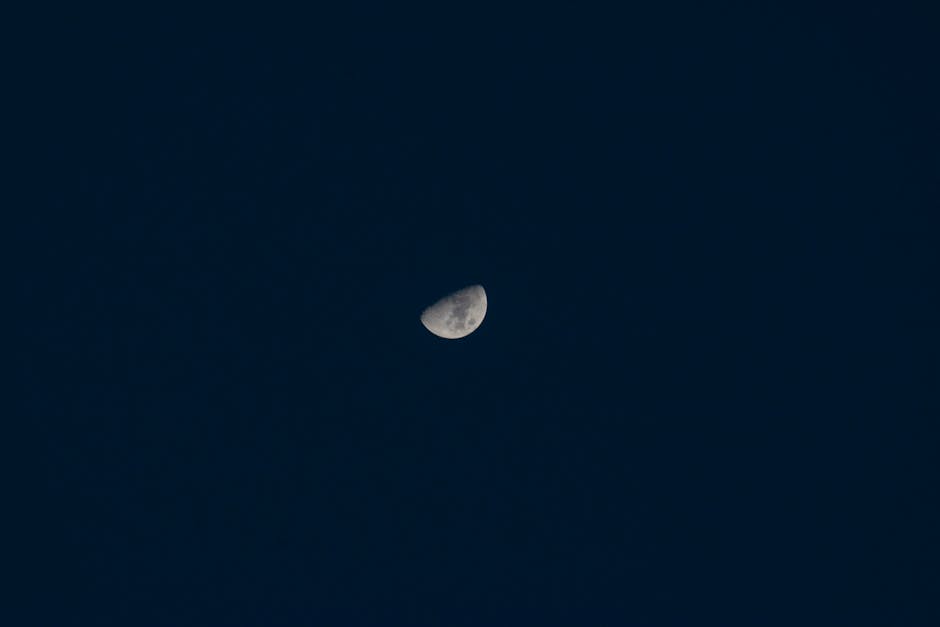
The Rarity of a Blue Micromoon
The combination of a Blue Moon and a Micromoon is what makes the May 31 event particularly rare. While Blue Moons occur every few years and Micromoons occur several times a year (as every full moon near apogee is a Micromoon), their precise synchronization is less common.
Statistically, a Blue Moon happens approximately once every 2.7 years. A Micromoon, by definition, occurs when the full moon phase falls close to the lunar apogee. Given the varying cycles of the Moon's phases and its orbital position, the convergence of both conditions—a second full moon in a month *and* that full moon being at its farthest point from Earth—is a less frequent occurrence. Such events typically happen once every decade or so, making the May 31 Blue Micromoon a truly special occasion for Hyderabad.
The last widely reported Blue Micromoon occurred in December 2009, and before that in 1990. This infrequent timing underscores the unique opportunity for observation and appreciation of celestial mechanics.
Key Developments: Observing the May 31 Blue Micromoon
The upcoming Blue Micromoon on May 31 is generating considerable excitement among astronomy enthusiasts and the scientific community in Hyderabad. Preparations are underway to ensure optimal viewing experiences and educational outreach.
Precise Timing and Visual Characteristics
For observers in Hyderabad, the full moon phase is expected to occur precisely on May 31. The Moon will also be near its apogee around this time, confirming its status as a Micromoon. While exact timings can vary slightly based on precise definitions, the night of May 31 will offer the best opportunity to witness the phenomenon.
The Moon will rise in the east as the sun sets in the west, becoming fully visible after twilight. Its apparent size will be at its smallest for a full moon, a subtle yet discernible difference for those accustomed to observing the night sky. Despite the "Blue Moon" moniker, the Moon itself will not appear blue. Any perceived bluish tint would be due to atmospheric scattering of light, often caused by dust or smoke particles in the air, rather than an intrinsic property of the Moon itself.
Optimal Viewing Locations in Hyderabad
Hyderabad offers several locations suitable for stargazing, though urban light pollution can pose a challenge. For the Blue Micromoon, observers should seek out areas with minimal artificial light interference and an unobstructed view of the eastern horizon at moonrise, and later the entire sky.
B.M. Birla Planetarium: As a premier astronomical institution in the city, the Birla Planetarium is expected to be a focal point for public observation. While specific events for May 31 are yet to be fully announced, planetariums often organize special viewing sessions equipped with telescopes and expert guidance for such significant celestial events. Its elevated location on Naubat Pahad provides a relatively clear vantage point.
* Open Spaces and Parks: Large open areas like Necklace Road, the vicinity of Hussain Sagar Lake, and various city parks (e.g., KBR National Park, Sanjeevaiah Park) can offer decent viewing opportunities, especially if one moves away from direct light sources.
* Elevated Points: Hilltops or higher ground on the outskirts of the city, such as those near Shameerpet or further away from the urban core, would provide the best conditions for minimizing light pollution and maximizing visibility.
* Residential Terraces: For many citizens, their own rooftops or balconies in less densely lit areas can serve as convenient viewing spots.
Role of Astronomy Clubs and Educational Institutions
Local astronomy clubs, such as the Hyderabad Astronomical Society (HAS), play a crucial role in promoting scientific literacy and public engagement during such events. These clubs often organize public outreach programs, including telescope viewing sessions, informative talks, and workshops. Their members, equipped with specialized knowledge and equipment, can help the public understand the nuances of the Blue Micromoon and appreciate its significance.
Educational institutions, including universities and schools, also contribute by integrating such events into their curriculum or organizing special observation nights for students. This fosters a deeper interest in science, technology, engineering, and mathematics (STEM) fields among the younger generation.
Astrophotography Opportunities
For astrophotography enthusiasts, the Blue Micromoon presents a unique challenge and opportunity. While the Moon will appear smaller, capturing its details requires precise camera settings and potentially a telephoto lens or telescope adapter. Photographers will aim to capture the full lunar disk, perhaps contrasting its smaller size with foreground elements to emphasize the "Micromoon" aspect. Tips for astrophotography include using a sturdy tripod, a remote shutter release, and manual focus, along with experimenting with exposure settings to avoid overexposure of the bright lunar surface.
Impact: Beyond the Visual Spectacle
The Blue Micromoon, while primarily a visual treat, carries broader implications for public engagement with science, education, and cultural appreciation of the cosmos. Its rarity amplifies these impacts, drawing attention to the wonders of the universe.
Boosting Public Interest in Astronomy and Science
Rare astronomical events like the Blue Micromoon serve as powerful catalysts for public interest in science. They provide tangible, observable phenomena that demystify complex scientific concepts such as orbital mechanics, lunar phases, and the vastness of space. For many, it's an opportunity to look up and ponder, sparking curiosity that can lead to deeper exploration of astronomy and other scientific disciplines.
The media coverage surrounding such events, coupled with organized public viewing sessions, helps to disseminate scientific information to a broad audience, including those who might not typically engage with scientific topics. This can lead to increased scientific literacy and a greater appreciation for the scientific method.
Educational Outreach and STEM Inspiration
Educational institutions and science centers leverage these events to inspire students. Hands-on observation, coupled with explanations from experts, can make abstract concepts concrete and exciting. Discussions about the Moon's orbit, its gravitational influence (like tides), and its role in Earth's history become more relevant when there's a live demonstration in the sky.
Such inspiration is crucial for encouraging young minds to pursue careers in STEM fields. Witnessing a rare celestial event can ignite a passion for exploration and discovery, potentially fostering the next generation of astronomers, physicists, and space scientists. Hyderabad, with its burgeoning tech and research sectors, stands to benefit from such renewed interest in scientific inquiry.
Cultural and Historical Resonance
The Moon holds immense cultural and historical significance across civilizations, including India. It is revered in various mythologies, celebrated in festivals, and often symbolizes cycles, time, and feminine energy. Events like a Blue Micromoon, while scientifically defined, can resonate with these cultural narratives, providing a modern context for age-old fascinations with the night sky.
Historically, lunar observations were vital for timekeeping, agriculture, and navigation. While modern technology has advanced beyond these primary uses, the intrinsic human connection to the Moon persists. A rare lunar event offers a moment for collective wonder, bridging scientific understanding with cultural heritage.
Contribution to Local Tourism and Economy
While not on the scale of major festivals, significant astronomical events can modestly boost local tourism and economy. Astrotourism, though nascent in many parts of India, encourages travel to areas with dark skies for better viewing. For an urban event like the Blue Micromoon, local businesses, particularly those catering to food and beverages in prime viewing areas, might see increased patronage. Sales of binoculars, telescopes, and related astronomical equipment also tend to rise in anticipation of such events.
What Next: Sustaining Astronomical Interest
The May 31 Blue Micromoon serves as a significant marker in Hyderabad's astronomical calendar, but the interest generated is expected to extend beyond this singular event. Efforts are ongoing to sustain public engagement and advance astronomical understanding.
Future Astronomical Events and Observation
Following the Blue Micromoon, astronomy enthusiasts and the general public can look forward to a host of other celestial events visible from Hyderabad throughout the year. These include:
Meteor Showers: Regular meteor showers like the Perseids (August) and Geminids (December) offer spectacular displays of shooting stars.
* Planetary Conjunctions: The alignment of planets in the night sky, often visible to the naked eye, creates visually appealing configurations.
* Lunar and Solar Eclipses: While full solar eclipses are rare for any specific location, partial solar eclipses and total or partial lunar eclipses occur more frequently and are always highly anticipated.
* Comet Sightings: Infrequent but highly anticipated, the appearance of bright comets can capture public imagination for weeks or months.
Local astronomy clubs and planetariums regularly publish calendars of these events, providing guidance on how and when to best observe them.
Advancing Lunar Research and Space Exploration
Events like the Blue Micromoon, by drawing attention to Earth's nearest celestial neighbor, also indirectly support broader lunar research and space exploration initiatives. India's own Chandrayaan missions have significantly contributed to our understanding of the Moon, and future missions by ISRO and other international space agencies continue to push the boundaries of lunar science.
Public enthusiasm for lunar phenomena translates into greater public support for space programs, which are often costly and long-term endeavors. This sustained interest helps secure funding and political will for scientific exploration, ultimately benefiting humanity's quest to understand the universe.
Mitigating Light Pollution and Promoting Dark Skies
A crucial challenge for urban astronomy, including in Hyderabad, is light pollution. The ever-increasing artificial light from cities obscures the view of fainter celestial objects, making stargazing more difficult. The excitement around events like the Blue Micromoon often reignites discussions about the importance of dark skies.
Advocacy groups and astronomers in Hyderabad continue to campaign for responsible lighting practices, such as using shielded fixtures that direct light downwards, reducing unnecessary illumination, and using warmer color temperatures for streetlights. These efforts aim to preserve the natural night sky, allowing future generations to experience the wonders of the cosmos without significant obstruction.
Continued Role of Institutions and Communities
The B.M. Birla Planetarium, alongside educational institutions like Osmania University and the Hyderabad Astronomical Society, will continue to be pivotal in fostering astronomical education and public engagement. These organizations provide platforms for learning, research, and community building among astronomy enthusiasts.
Regular workshops, lectures, and observation sessions ensure that the interest sparked by rare events like the Blue Micromoon is nurtured and developed into a deeper, lasting appreciation for science and the universe. Hyderabad's vibrant scientific community is committed to ensuring that the city remains a hub for astronomical observation and education.
The Blue Micromoon on May 31 offers Hyderabad a unique opportunity to pause, look skyward, and connect with the grand cosmic ballet. It is a moment for scientific curiosity, cultural reflection, and collective wonder, leaving a lasting impression on all who witness this rare celestial event.
